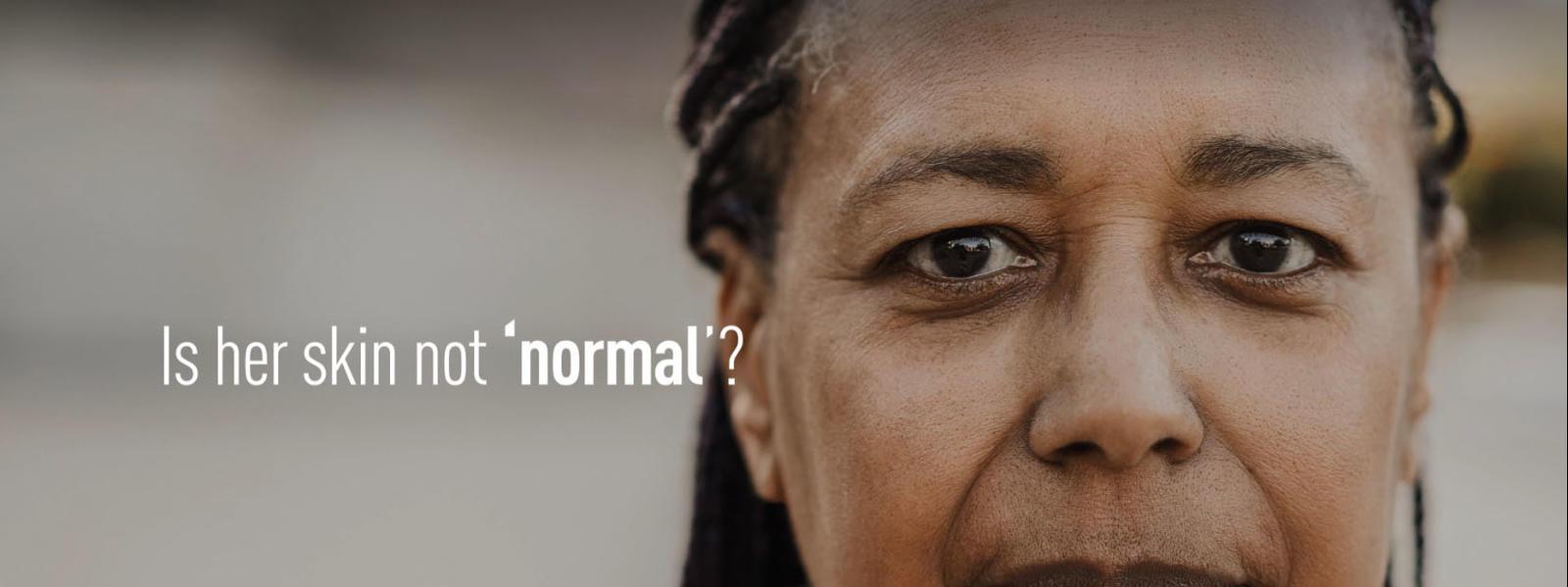

No to Normal
Influencer MarketingUnilever removed the word 'normal' from beauty and personal care packaging, advertising and content across 190 countries to champion inclusive beauty.
About the campaign
The beauty industry exists to help people feel better but often makes them feel worse, and Unilever's own product language was part of the problem: descriptors like normal skin and normal hair had become discriminators, quietly implying that many consumers fell outside an acceptable standard. Edelman's strategic logic held that for a business positioned around inclusion, the most credible act was subtraction rather than addition, a concrete, observable removal instead of another brand statement.
On 9 March 2021, under its Positive Beauty vision, Unilever announced it would remove the word normal from all beauty and personal care packaging, advertising and content across 190 countries. The announcement was anchored by a commissioned study of 10,000 people across nine markets, which found 71 percent of respondents said the word normal on beauty products impacts people negatively, rising to eight in ten among 18-to-35-year-olds, giving journalists an independent data point beyond Unilever's own voice. Edelman coordinated a simultaneous launch across all continents, amplified by experts, activists, influencers and the portfolio's brand ambassadors.
The agency reports 8,200 articles, 5.5 billion impressions and 318,000 engagements across more than 80 countries, and states that within a year of launch the word normal had been removed entirely from Unilever brand packaging, content and collateral.
Case in 60 seconds
Unilever wanted to be seen as a progressive beauty business, but its existing commitments lacked differentiation, and product descriptors like 'normal skin' and 'normal hair' implied that many consumers were somehow lesser — a problem identified by Edelman in the campaign brief.
The beauty industry exists to help people feel better but often makes them feel worse; traditional product descriptors had become discriminators rather than descriptors, as framed by Edelman in its strategic rationale.
Because Unilever is positioned around inclusion rather than exclusion, Edelman argued its biggest action had to be about taking something away rather than adding something — leading to the 'No to Normal' idea.
On 9 March 2021, Unilever announced it would remove the word 'normal' from all packaging, advertising and content across its beauty and personal care portfolio in 190 countries, backed by a 10,000-person, nine-market research study and a simultaneous global media launch using experts, activists and influencers.
Edelman reports the campaign generated 8,200 articles, 5.5 billion impressions and 318,000 engagements, with coverage across more than 80 countries; a year on from launch, the agency states the word 'normal' had been removed entirely from Unilever brand packaging, content and collateral.
Strategy Breakdown
The primary strategy-learning section — interpretation, not a press-release summary.
Creative & Execution System
Assets & channels
- Unilever global press announcement (9 March 2021)
- Commissioned research report (10,000 respondents, nine markets)
- Earned media and journalist outreach across all continents
- Social and digital content via Unilever portfolio brands
- Packaging and product label changes across all markets (multi-year rollout)
Partners
- Edelman (lead agency — PR, earned creative, influencer outreach)
- Experts, activists and influencers (coordinated global launch amplification, per Edelman case study)
Participation mechanic
- Simultaneous multi-continent launch to create a single coordinated global news moment
- Portfolio brands, influencers and ambassadors carried the message to consumers via social and digital channels
- Proprietary research provided shareable data points for media and public conversation
Creator role
- Unilever brand influencers and ambassadors amplified the campaign message via social and digital channels; experts and activists provided third-party endorsement at launch
Results & Evidence
| Metric | Value | Result type |
|---|---|---|
| Articles generated | 8,200 | Earned media volume |
| Impressions | 5.5 billion | Earned media reach |
| Engagements | 318,000 | Audience engagement |
| Countries with coverage | Over 80 | Geographic reach |
| Consumers agreeing 'normal' on beauty products impacts people negatively | 71% | context |
Awards & Recognition
| Award show | Year | Category | Result |
|---|---|---|---|
| Shorty Impact Awards | 2021 | Diversity, Equity & Inclusion | Finalist (7th Annual) |
Why Edelman's strategy worked
- 1
A subtractive idea can carry more weight than an additive one: removing 'normal' gave journalists a concrete, repeatable story and a visible behaviour change rather than another brand claim, as identified by Edelman in its strategic rationale.
- 2
Pairing a bold action with proprietary research gives an earned campaign both a news hook and external validation. The 10,000-person, nine-market study provided shareable data points that extended the story beyond Unilever's own voice.
- 3
A simultaneous multi-continent launch, using Unilever's full portfolio of brands, influencers and ambassadors, multiplied reach well past the markets that directly participated in the research or activation.
- 4
Setting a multi-year implementation timeline — with the full removal committed to complete within two years — allowed the company to make a credible public commitment while delivering the operational change in stages.
- 5
Corporate reputation campaigns that are anchored in an operational decision (a packaging change applied across 190 countries) are harder for audiences and media to dismiss as purely symbolic than those anchored in communications alone.
Results
51.7M+
Total views
2.9M+
Interactions
17.7%
Engagement rate
Results
10M+
Views
5M+
Impressions
20K+
New followers