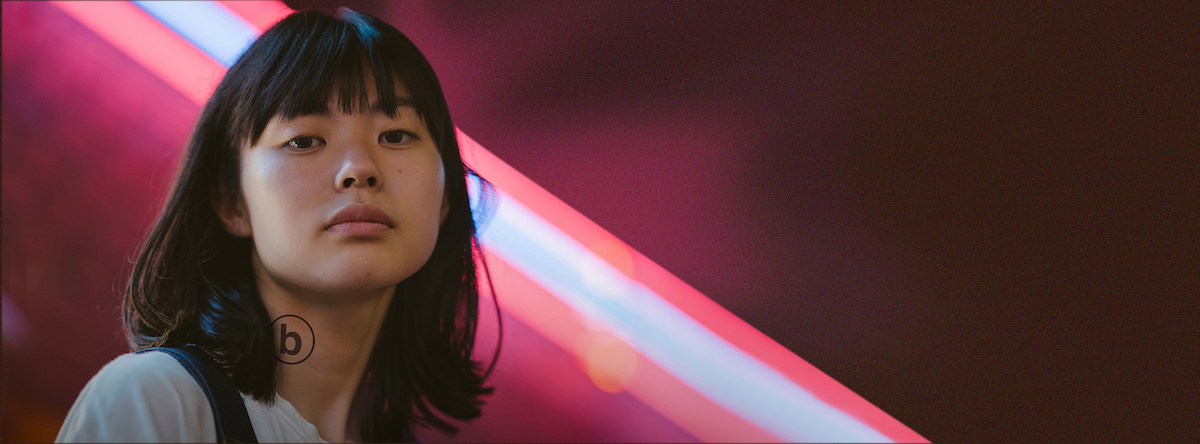

Bodyright
Influencer MarketingUNFPA and Edelman introduced the Ⓑ symbol as a new 'copyright' for the human body to expose the gap between IP law protections and online image rights for women.
About the campaign
Corporate logos are protected online with speed and legal force, while women whose images are abused face slow, burdensome removal processes and far fewer rights; Economist Intelligence Unit data cited by UNFPA found 85 percent of women with internet access had witnessed online violence against other women and 38 percent had experienced it themselves. Edelman gave that abstract policy gap a symbol everyone already understands: Bodyright introduced the b-in-a-circle mark as a new copyright for the human body, arguing that people deserve at least the same protection as a corporate logo.
Launched on 2 December 2021 during the 16 Days of Activism Against Gender Based Violence, the campaign opened with a spoken-word film by London poet Rakaya Fetuga, released exclusively with Teen Vogue, while the symbol was distributed through Giphy and the Bodyright website so anyone could apply it to an Instagram story without changing their social behaviour. A Global Citizen petition pressed policymakers and big tech, and celebrity advocates including Rita Ora, Sharon Stone, Ayta Sasmaz and UNFPA Goodwill Ambassador Ashley Judd amplified the message.
Coverage spanned markets from the US and UK to India, Egypt and Cuba, with an estimated global reach of 1.2 billion reported, and the campaign took Gold in Gender Equality and Silver in Activism at the 7th Shorty Impact Awards.
Case in 60 seconds
Women whose images are abused online have far fewer legal protections than corporations defending a logo or piece of copyrighted IP, and the removal process is slow and burdensome. Economist Intelligence Unit data cited by UNFPA found 85% of women with internet access had witnessed online violence against other women, and 38% had experienced it personally.
People immediately understand and respect copyright. If the injustice of online image abuse could be expressed through that same familiar framework, an abstract policy problem would become concrete, quotable, and emotionally accessible, particularly for a Gen Z audience.
Bodyright: a ⓑ symbol presented as a new 'copyright' for the human body, arguing that people deserve at least the same protection as a corporate logo.
Edelman launched the campaign on 2 December 2021 during the 16 Days of Activism Against Gender Based Violence. A spoken-word film by London poet Rakaya Fetuga launched exclusively in Teen Vogue, the ⓑ symbol was distributed via Giphy and the Bodyright website for use in Instagram stories, and a petition targeting policymakers and big tech ran through Global Citizen. Celebrity advocates including Rita Ora, Ayta Sasmaz, Sharon Stone, and UNFPA Goodwill Ambassador Ashley Judd amplified the campaign.
The campaign reported an estimated global reach of 1.2 billion and won Gold Honor in Gender Equality and Silver Honor in Activism Campaign at the 7th Annual Shorty Impact Awards. Coverage spanned markets including the US, UK, France, Italy, Singapore, Canada, Mexico, India, Egypt, and Cuba.
Strategy Breakdown
The primary strategy-learning section — interpretation, not a press-release summary.
Creative & Execution System
Assets & channels
- Spoken-word film by Rakaya Fetuga, distributed via earned media with a Teen Vogue exclusive (Edelman UK)
- ⓑ symbol as Instagram story sticker, available via Giphy and the Bodyright website (Direct New Ideas, Issue 62)
- Online petition via Global Citizen targeting policymakers and tech companies (Edelman UK)
- UNFPA press release quoting Executive Director Dr. Natalia Kanem, issued 2 December 2021 (UNFPA)
- Multi-market earned media generating coverage across the US, UK, France, Italy, Singapore, Canada, Mexico, India, Egypt, Cuba and other markets (Edelman UK)
Partners
- Edelman (lead agency, attribution confirmed by Direct New Ideas, Issue 62)
- Global Citizen (petition platform, Edelman UK)
- Giphy (symbol distribution, Direct New Ideas, Issue 62)
- Teen Vogue (exclusive launch partner, Edelman UK)
Participation mechanic
- Apply the ⓑ symbol as a sticker on Instagram stories or other social posts via Giphy or the Bodyright website (Direct New Ideas, Issue 62)
- Sign the petition via Global Citizen pressuring policymakers and big tech (Edelman UK)
Creator role
- Rakaya Fetuga, poet and spoken-word artist (London, Ghanaian and Nigerian descent): crafted and delivered the launch film to humanise the harms of online violence without technical language (Edelman UK)
- Ashley Judd, UNFPA Goodwill Ambassador: shared the campaign with her 532k followers with pro bono promotion by UNFPA influencers (Edelman)
- Rita Ora (16.1 million followers): celebrity amplifier (Direct New Ideas, Issue 62)
- Ayta Sasmaz (3.8 million followers): celebrity amplifier (Direct New Ideas, Issue 62)
- Sharon Stone (2.9 million followers): celebrity amplifier (Direct New Ideas, Issue 62)
Results & Evidence
| Metric | Value | Result type |
|---|---|---|
| Estimated global reach | 1.2 billion | Reach |
| Women who witnessed online violence | 85% | context |
| Petition signatures | 11,300+ | Petition / Engagement |
Awards & Recognition
| Award show | Year | Category | Result |
|---|---|---|---|
| Shorty Impact Awards | 2022 | Gender Equality | Gold Honor |
| Shorty Impact Awards | 2022 | Activism Campaign | Silver Honor |
Why Edelman's strategy worked
- 1
Reframing a policy problem through a widely understood convention, copyright, made an abstract injustice concrete and immediately quotable. The comparison between IP protection and body image rights communicated the argument in a single symbol, as Edelman's case study describes.
- 2
A single ownable symbol (ⓑ) that mimics an existing visual convention can carry a campaign across platforms and markets without requiring translation or localisation. Its integration into Giphy made adoption frictionless within tools audiences already used, per Direct New Ideas, Issue 62.
- 3
Pairing a symbolic action (applying the sticker) with a structural action (signing the Global Citizen petition) gave audiences both an expressive outlet and a direct route to pressure decision-makers, per Edelman UK.
- 4
Using spoken word rather than statistics or legal language to communicate the harms of online violence added emotional accessibility and suited earned media formats. The film's exclusive placement in Teen Vogue aligned the emotional register with the Gen Z target audience, as noted in Edelman's case study.
- 5
Timing the launch to the 16 Days of Activism Against Gender Based Violence gave the work a built-in news hook and aligned it with existing advocacy infrastructure, concentrating media and public attention, per Direct New Ideas, Issue 62.
- 6
Celebrity amplification from advocates with large but varied follower counts (from 532k to 16.1 million) extended organic reach across multiple audience demographics without paid media spend, as reported in Edelman's case studies and the trade listing.
Results
51.7M+
Total views
2.9M+
Interactions
17.7%
Engagement rate

Results
10M+
Views
5M+
Impressions
20K+
New followers