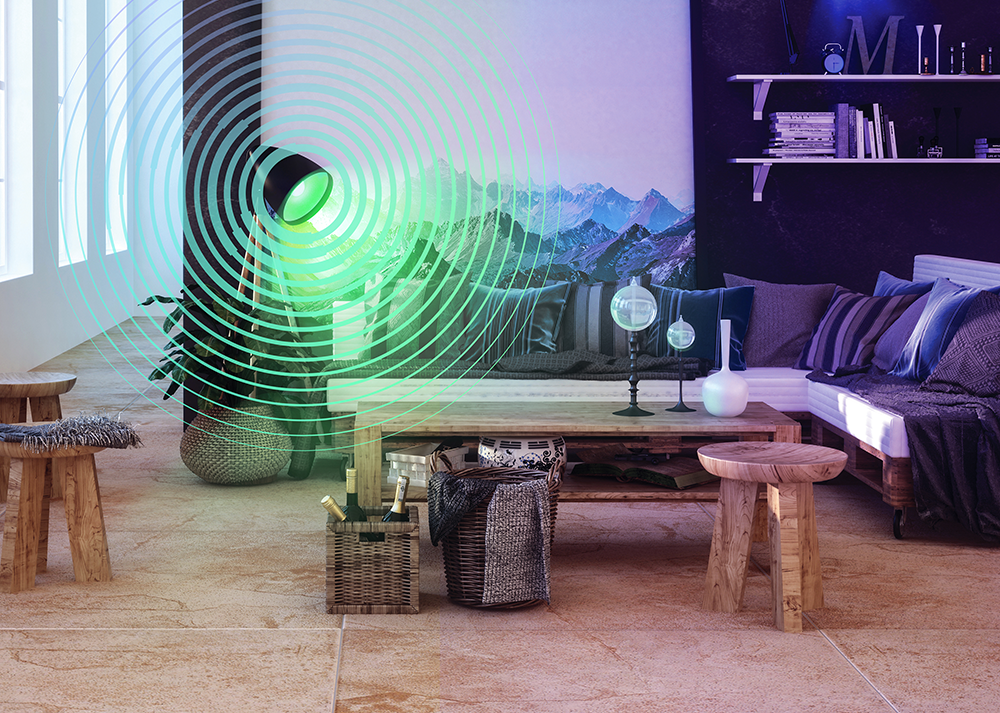

The Green Light Signal
Influencer MarketingEdelman wired National Grid's live carbon-intensity data to a smart LED bulb that glows green when home electricity is at its cleanest, turning grid decarbonisation into an ambient household cue.
About the campaign
National Grid was making material progress towards net zero, but the story was invisible to British households, and years of energy messaging had failed to shift home electricity use to cleaner windows because every approach required people to consult an app or dashboard, an extra cognitive step that kills habitual change.
Edelman and production studio Solarflare removed the step entirely: the Green Light Signal wired National Grid ESO's live Carbon Intensity API to LIFX consumer smart bulbs so the light glows green when the local grid is running on its cleanest, lowest-carbon sources, an ambient household cue prompting people to run the dishwasher or charge the car in that window. Threshold calibration was treated as creative work, with the green signal aligned to National Grid's own low-emission benchmarks so it carried real informational weight. Launched on 20 April 2021, bulbs were distributed to celebrities, influencers, politicians including COP26 minister Alok Sharma, and the public, with users signing up and adding location data for localised signals; an installation outside 10 Downing Street was timed to COP26 in November.
Edelman reports 237.8 million reach, 1.1 million app runs and a modelled carbon saving equivalent to 17.1 million mature trees, and the work took a Bronze Honor for Creative Use of Technology at the 14th Shorty Awards.
Case in 60 seconds
The British public did not understand the progress National Grid was making towards net zero, and existing energy messaging had repeatedly failed to shift household use to cleaner windows without asking people to consult an app or dashboard.
If people could see, without any active effort, when their home electricity was coming from renewable sources, they would be more likely to choose those moments for energy-intensive tasks, as Edelman's brief framing put it: meet the audience at home with a practical solution for reducing their own environmental impact.
Wire National Grid ESO's live carbon-intensity data to a consumer smart LED bulb via an API, so the bulb glows green when the grid is running on its cleanest, lowest-carbon sources — making an invisible infrastructure story visible in every room.
Edelman and production partner Solarflare built an IoT pipeline from the Carbon Intensity API through to LIFX smart bulbs, calibrating the green threshold to National Grid's own low-emission benchmarks. Bulbs were distributed to celebrities, influencers, politicians including COP26 minister Alok Sharma, and the public, with an installation outside 10 Downing Street timed to COP26.
Edelman reports a reach of 237.8M and 1.1M app runs, with a modelled carbon saving equivalent to 17.1 million mature trees. The campaign received a Bronze Honor at the 14th Shorty Awards for Creative Use of Technology and was entered in the Caples Awards 2022 under Creative Use of Data.
Strategy Breakdown
The primary strategy-learning section — interpretation, not a press-release summary.
Creative & Execution System
Assets & channels
- LIFX smart LED bulb configured as the Green Light Signal — the primary physical campaign asset
- Carbon Intensity API integration pushing live grid data to bulbs in real time
- Campaign landing page where users signed up and added location data
- Influencer and celebrity seeding with user guides
- Installation outside 10 Downing Street
- COP26 event presence
- Direct / earned media (registered as Direct in the Caples entry)
Partners
- Edelman (lead agency)
- Solarflare (production studio, IoT system build)
- National Grid ESO (carbon-intensity data source)
- LIFX (smart bulb hardware platform)
Participation mechanic
- Consumers and gifted recipients connected a LIFX bulb to the Green Light Signal API via a sign-up flow, adding location data to receive localised carbon-intensity signals
- Bulb glows green when the local grid supply passes the low-carbon threshold, prompting users to run dishwashers, charge EVs or run other heavy loads in that window
Creator role
- Influencers, celebrities and politicians acted as distributors and earned-media amplifiers, pointing audiences to the campaign landing page and demonstrating the bulb in their own homes or offices
Results & Evidence
| Metric | Value | Result type |
|---|---|---|
| Total reported reach | 237.8M | Reach |
| App runs | 1.1M | Engagement |
Awards & Recognition
| Award show | Year | Category | Result |
|---|---|---|---|
| Shorty Awards | 2022 | Creative Use of Technology | Bronze Honor |
| Caples Awards | 2022 | Creative Use of Data | Entry (result not specified in available sources) |
Why Edelman's strategy worked
- 1
**Ambient cues outperform active dashboards for behaviour change.** By placing the signal in a bulb already in the room, Solarflare and Edelman removed the cognitive step that had repeatedly stopped energy-shift messaging from producing habitual action. A peripheral colour change requires no deliberate attention.
- 2
**Threshold calibration is a creative decision, not a technical one.** The green signal was deliberately aligned to National Grid's own carbon-intensity benchmarks so it would turn green at meaningful moments — not too often and not too rarely. Solarflare notes that a signal which loses meaning through miscalibration loses its entire behaviour-change function.
- 3
**Live, credible data raises the ceiling on trust.** Wiring the device to National Grid ESO's own carbon-intensity feed rather than a modelled proxy gave the signal institutional credibility and made it auditable in principle, which is important when asking people to change habitual routines.
- 4
**Seeding a physical device to high-profile recipients converts a home gadget into a public story.** Distributing bulbs to politicians, influencers and celebrities — and securing the Downing Street installation — extended the campaign's reach far beyond the households that received bulbs directly, turning an IoT product into an earned-media moment timed to COP26.
- 5
**PR-led IoT can generate attention and awards recognition without a paid media budget.** The Caples entry classifies the work as Direct, reflecting a model where the device itself does the distributing work and earns coverage rather than buying it.
- 6
**Proof-of-concept framing matters.** Solarflare positions the project as a demonstration that ambient IoT can function as a public communication channel. This framing helps justify the investment and points towards scalable applications beyond a single campaign.
Results
10M+
Views
5M+
Impressions
20K+
New followers

Results
51.7M+
Total views
2.9M+
Interactions
17.7%
Engagement rate