
Worlds Apart
Influencer MarketingHeineken paired strangers with opposing views to build something together, then revealed their differences and offered them a beer, driving 50 million+ views and a reported 7.3% UK sales lift.
About the campaign
In 2017 Heineken's Open Your World positioning lacked concrete meaning: only 14 percent of consumers felt the brand delivered the impact its line claimed, and its 2.1 percent premium lager penetration trailed Peroni's 5.1 and Stella's 12.1. Against rising political and social polarisation that most brands avoided, Edelman London and creative partner Publicis London anchored the platform in a documented behavioural insight, validated by a Goldsmiths University study, that discovering common ground makes people more open.
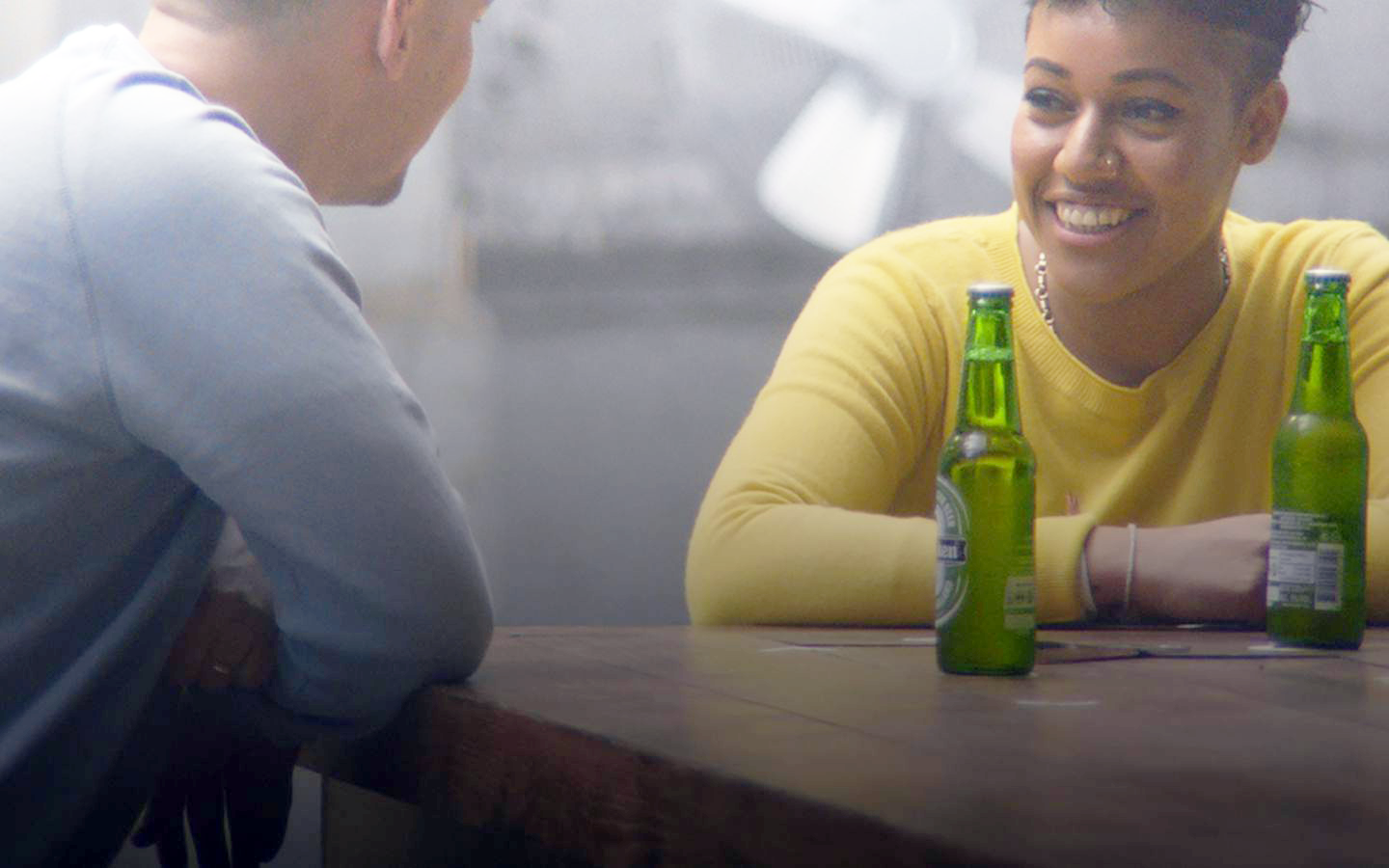
Worlds Apart proved it on camera: real strangers with polar opposite views were paired without knowing each other's beliefs, built something together, then faced a filmed reveal and a choice, leave or stay and talk over a beer, making the product the reward for openness rather than an interruption. The roughly five-minute documentary-style film, directed by Toby Dye and produced by RSA Films, launched in May 2017 and was seeded through a precision-targeted earned media and influencer strategy, while a Human Library partnership extended the idea into UK pubs, bars and festivals.
The film drew more than 50 million views across over 150 countries, over 625 articles, broadcast coverage on CBS, CNN, FOX and MSNBC, the top YouTube ad slot for April 2017 and multiple Bronze Lions at Cannes, and Heineken UK reported a 7.3 percent beer sales increase in the 12 weeks following launch.
Case in 60 seconds
Heineken's "Open Your World" positioning lacked concrete meaning for many consumers, and the brand trailed premium rivals Peroni and Stella in premium-segment penetration, according to a student analysis of trade figures cited in the package.
People are not as open as they think, but are more likely to open up when they find common ground over a beer. A Goldsmiths University scientific study provided evidence that discovering common ground leads people to become more open, giving the brand a documented behavioural basis for its platform.
Pair real strangers who hold polar opposite views, have them build something and talk without knowing the other's identity, then reveal the truth and offer them the choice to leave or stay for a beer — filming the whole thing as an unscripted documentary-style social experiment.
The roughly five-minute film, directed by Toby Dye and produced by RSA Films, was distributed through a precision-targeted earned media and influencer strategy. A Human Library partnership extended the idea into real-world experiences for Heineken UK employees and consumers in UK pubs, bars and summer festivals. The film reached broadcast news on CBS, CNN, FOX and MSNBC and trended on social platforms.
The film was viewed more than 50 million times worldwide, generated significant earned media coverage, and Heineken UK reported a 7.3% increase in beer sales in the 12 weeks following the campaign, describing it as their most effective campaign ever.
Strategy Breakdown
The primary strategy-learning section — interpretation, not a press-release summary.
Creative & Execution System
Assets & channels
- Approximately five-minute documentary-style social experiment film (central asset) — Vimeo/YouTube
- Earned media and broadcast coverage: CBS, CNN, FOX, MSNBC — reported by Vimeo case notes
- X (Twitter) trending activation — Edelman
- YouTube (No.1 ad for April 2017) — Vimeo case notes
- Reddit front page — Vimeo case notes
- Human Library experiential activations in UK pubs, bars and summer festivals — Edelman
- Human Library experiences for Heineken UK employees — Edelman
Partners
- Edelman London — earned media, influencer and experiential lead — Edelman
- Publicis London — creative partner — Adsspot
- RSA Films — production company — Vimeo
- Toby Dye — director — Vimeo
- Goldsmiths University — academic validation study — Edelman
- Human Library — real-world experiential partner — Edelman
Participation mechanic
- Strangers with opposing views paired without prior knowledge of the other's beliefs, completing a task and conversation before a filmed reveal
- Audience offered the choice to share, react or discuss online
- UK consumers invited to participate in Human Library events in pubs, bars and festivals
- Heineken UK employees given access to Human Library experiences
Creator role
- No independent creator or influencer content role identified in the package — distribution was earned-led via media and influencer seeding organised by Edelman, not user-generated creator content
Results & Evidence
| Metric | Value | Result type |
|---|---|---|
| UK beer sales increase | 7.3% | Sales |
| Consumers calling Heineken their brand | 80% | Brand perception |
| Consumers feeling closer brand affinity | 78% | Brand affinity |
| Film views | 50M+ | Reach / views |
Awards & Recognition
| Award show | Year | Category | Result |
|---|---|---|---|
| Cannes Lions | 2017 | Multiple categories (specific category names not disclosed in the package) | Bronze Lion (multiple) |
| LIA Awards | 2017 | Not specified in the package | Winner (level not specified) |
| Epica Awards | 2017 | Not specified in the package | Bronze |
| Brand Film Festival | 2017 | Not specified in the package | Gold |
Why Edelman's strategy worked
- 1
Translating an abstract brand line into a concrete, testable behaviour gave audiences something to watch and discuss rather than just a sentiment to absorb. The 'Open Your World' platform resonated with only a small share of consumers before the campaign, according to a student analysis of trade figures; the social experiment made the same idea legible and shareable.
- 2
Validating the creative premise with an academic study, Goldsmiths University provided evidence that finding common ground leads to greater openness, gave journalists a credible news hook beyond the beer brand's own claims, which was central to generating substantial earned media coverage.
- 3
The reveal mechanic built narrative tension that made the film worth watching to the end and worth sharing. The emotional payoff — strangers choosing to stay and talk — meant the audience completed the brand message rather than being told it.
- 4
An earned-first distribution model, seeded through a precision-targeted influencer and media strategy, allowed the film to reach broadcast news coverage on CBS, CNN, FOX and MSNBC without relying primarily on paid placement.
- 5
The Human Library partnership extended the idea beyond a single film into real-world consumer and employee experiences, keeping the message active in physical spaces — UK pubs, bars and summer festivals — after the initial online wave.
- 6
Placing the product at the moment of choice — the offer of a beer after the reveal — made the brand functional to the story rather than a sponsor of it, reducing the gap between commercial interest and editorial credibility.
Results
51.7M+
Total views
2.9M+
Interactions
17.7%
Engagement rate
Results
10M+
Views
5M+
Impressions
20K+
New followers