
Share The First
Influencer MarketingDove and Edelman asked women to post their unedited first photo, turning a deleted everyday artefact into a global movement that earned over 1 billion impressions.
About the campaign
Dove's research put numbers on a habit so normalised it had become comedy fodder: nine in ten women take up to 50 photos before posting one, and 60 percent avoid sharing special moments because they dislike how they look, while newer beauty brands were moving onto Dove's long-held territory of women's confidence. Edelman found the campaign in what gets thrown away: the first photo, typically deleted or hidden, is a tangible artefact of perfection pressure, and sharing it unedited is a single, concrete act of defiance that anyone can perform regardless of following.
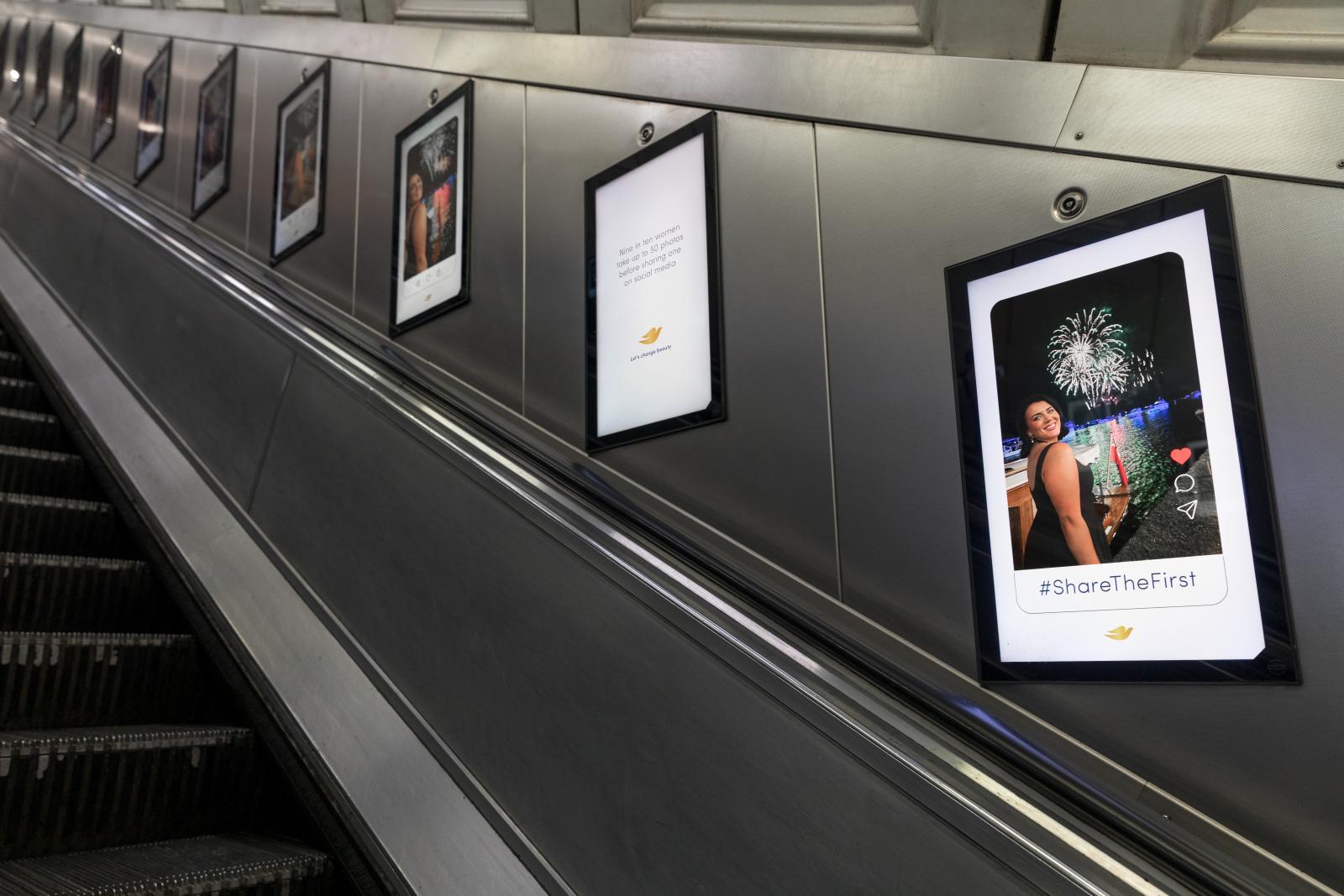
Share The First launched on 12 March 2025 with singer Bebe Rexha posting her own unedited first photos alongside the curated versions, followed by 111 global creators across body types, ethnicities and platforms sharing theirs under #ShareTheFirst, with Dove's two decades of Real Beauty equity and its Self-Esteem Project as the credibility anchor. A 64-placement out-of-home takeover at London's Liverpool Street Station ran creator content exclusively, each placement ending on a prompt to share, while strategic press outreach amplified the research findings across 14 countries.
The campaign reported more than 1 billion impressions along with self-reported gains in brand preference, consideration and association with authentic beauty, and was shortlisted at the 2025 Gerety Awards and named a PRWeek Awards finalist.
Case in 60 seconds
Dove research found that 9 in 10 women take up to 50 photos before posting and 60% avoid sharing special moments because they dislike how they look, while newer beauty brands were eroding Dove's long-held equity in women's confidence.
The first photo, typically deleted or hidden, is a tangible artefact of the pressure women feel to appear perfect online — a behaviour so normalised it had become the subject of comedy, despite quietly harming self-esteem, as Edelman framed it.
Turn the discarded first photo into a single, repeatable act of defiance: share it unedited under #ShareTheFirst, making rejection of perfection culture accessible to anyone regardless of audience size.
Edelman opened the movement on 12 March 2025 with singer Bebe Rexha sharing her own unedited first photos, then recruited 111 global creators across body types, ethnicities, and platforms, backed by a 64-placement OOH takeover at London's Liverpool Street Station and strategic press outreach.
The campaign reported more than 1 billion impressions across 14 countries, along with self-reported increases in brand preference, consideration, and association with authentic beauty, and was shortlisted at the Gerety Awards 2025 and named a PRWeek Awards finalist.
Strategy Breakdown
The primary strategy-learning section — interpretation, not a press-release summary.
Creative & Execution System
Assets & channels
- Instagram and cross-platform social media centred on #ShareTheFirst hashtag participation
- 64-placement out-of-home takeover at Liverpool Street Station, London, featuring scrollable creator content and camera-roll imagery ending on a #ShareTheFirst prompt
- A 2 minute 9 second case study film (referenced in the Gerety Awards listing)
- Strategic press outreach amplifying Dove research findings
Partners
- Edelman (lead agency, entrant — confirmed by Gerety Awards 2025 listing and PRWeek Awards finalist entry)
Participation mechanic
- Users invited to post their unedited first photo using #ShareTheFirst
- Each OOH placement ended with a direct prompt to #ShareTheFirst, bridging physical and digital participation
- Creator content seeded across demographics to model the behaviour and signal that the pressure is universal
Creator role
- Bebe Rexha opened the campaign by sharing her own unedited first photos alongside curated ones to reveal the reality behind her social presence
- 111 global creators across body types, ethnicities, and platforms participated by sharing first photos with personal authenticity stories
- Creator content was also used exclusively for the Liverpool Street Station OOH placements, blurring the line between in-person and online
Results & Evidence
| Metric | Value | Result type |
|---|---|---|
| Total impressions | 1 billion+ | Reach |
| Women and girls less likely to retake photos | -6 pts | Behaviour Change |
| Women and girls confident sharing unedited photos | 2 in 3 women, 8 in 10 girls | Attitude / Sentiment |
| Dove seen as championing inclusivity | +9 pts to 88% | Brand Metric |
| Dove seen as standing up for important issues | +14 pts to 89% | Brand Metric |
Awards & Recognition
| Award show | Year | Category | Result |
|---|---|---|---|
| Gerety Awards | 2025 | Communication Cut — PR, Single | Shortlisted |
| PRWeek Awards | 2025 | Not specified in package | Finalist |
Why Edelman's strategy worked
- 1
A single, concrete action (sharing one specific already-taken photograph) is easier to scale than a broad aspirational message. Edelman's approach gave women a ready-made object to share rather than asking them to create something new, removing the primary barrier to participation.
- 2
Using a discarded everyday artefact — the deleted first photo — as the creative device gave the campaign a tangible mechanic that translated equally well across social media and out-of-home, as demonstrated by the Liverpool Street Station 64-placement takeover that used real creator camera rolls.
- 3
Opening with a celebrity, Bebe Rexha, who had publicly spoken about body image pressure, then layering 111 creators across body types, ethnicities, and platforms, helped the campaign read as universal and peer-driven rather than top-down or brand-led.
- 4
Anchoring the movement in Dove's more than 20 years of Real Beauty equity and the Self-Esteem Project gave the campaign inherited credibility that newer purpose entrants cannot replicate quickly, and connected #ShareTheFirst to an established consumer association.
- 5
Choosing a behaviour that women already laughed about — taking 50 photos before posting — meant the insight required no education. The campaign redirected an existing cultural conversation rather than trying to start a new one, which Dove research had already validated at scale.
Results
10M+
Views
5M+
Impressions
20K+
New followers
Results
51.7M+
Total views
2.9M+
Interactions
17.7%
Engagement rate