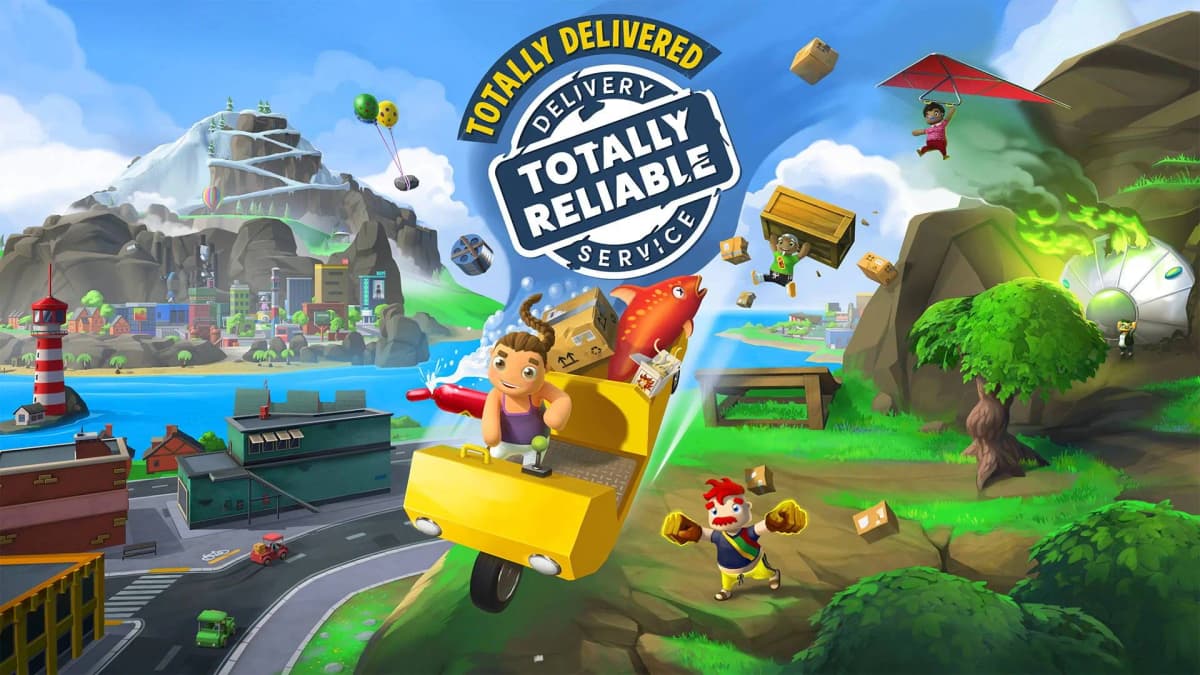

Totally Reliable Delivery Service Steam Launch
Cloutboost ran a single-weekend gaming YouTuber campaign for tinyBuild's Totally Reliable Delivery Service Steam launch, reporting 5M+ total views and 50M+ total impressions.
Case in 60 seconds
Totally Reliable Delivery Service arrived on Steam having already shipped on Epic, Xbox One, Switch, PS4, App Store and Google Play, so the launch had to build recognition on a new storefront while re-engaging players who had already played it elsewhere.
The campaign appears to turn on the idea that returning players needed a reason to buy a game they already owned in another form, because the argument was that the Steam version improved gameplay mechanics, networking, graphics and character animation.
Rather than spread creator content across a long runway, the work concentrated every video into one weekend so a second launch on a new storefront would carry the visibility of a first one.
Thirteen mid-tier gaming YouTubers across EN, FR, DE, PT and RU released dedicated videos, 60-90-second integrations placed within the first three minutes of full-length videos, and live streams over a single weekend, with content usage rights secured so the material could be re-streamed on the Steam community page on launch day.
Cloutboost reports 50M+ total impressions and 5M+ total views from 13 influencers, alongside increased Steam wishlists and purchases which the page describes without attaching figures to either.
Strategy Breakdown
Creative & Execution System
Assets & channels
- Steam
- YouTube
- dedicated reviews
- dedicated videos
- integrated videos
- live streams
- stream recording
Partners
- Cloutboost
Creator role
- IGP — creator
- Kuplinov ► Play — creator
- SpyCakes — creator
- 13 mid-tier gaming YouTubers
- Eight YouTube gaming influencers integrated 60-90-second clips
- Four YouTube gaming influencers released dedicated videos
Results & Evidence
| Metric | Value |
|---|---|
| # Of Influencers | # of Influencers 13 |
| Let's Play Views | His Let's Play accumulated 1,8M views as of 2023 |
| Total # of Impressions | Total # of Impressions 50M+ |
| Total # of Views | Total # of Views 5M+ |
| YouTube Views | With influencer content strategically timed for a single weekend release, the campaign garnered over 4.5 million YouTube views over time. |
| Lifetime Downloads | TRDS boasted a remarkable track record, with over 14 million downloads and more than 15,000 content creators live streaming the game, accumulating 988,178 hours of gameplay. |
Why Cloutboost's strategy worked
- 1
Casting on genre adjacency and true reach rather than follower scale appears to be the selection logic here, because creators were chosen on their history with Among Us, Fall Guys and TABS and on active audience percentage.
- 2
Compressing releases into a single weekend reads as a way to manufacture launch density for a title that had no novelty left, since the game was already available on six other platforms.
- 3
Buying content usage rights alongside the placements let the same creator videos work twice, once on YouTube and again on the Steam community page where a purchase decision is actually made.
- 4
Placing 60-90-second integrations inside the first three minutes of longer videos suggests the buy was priced against watch-through behaviour rather than against a full dedicated video, which only four of the thirteen creators produced.

Results
10M+
Views
5M+
Impressions
20K+
New followers
Results
51.7M+
Total views
2.9M+
Interactions
17.7%
Engagement rate