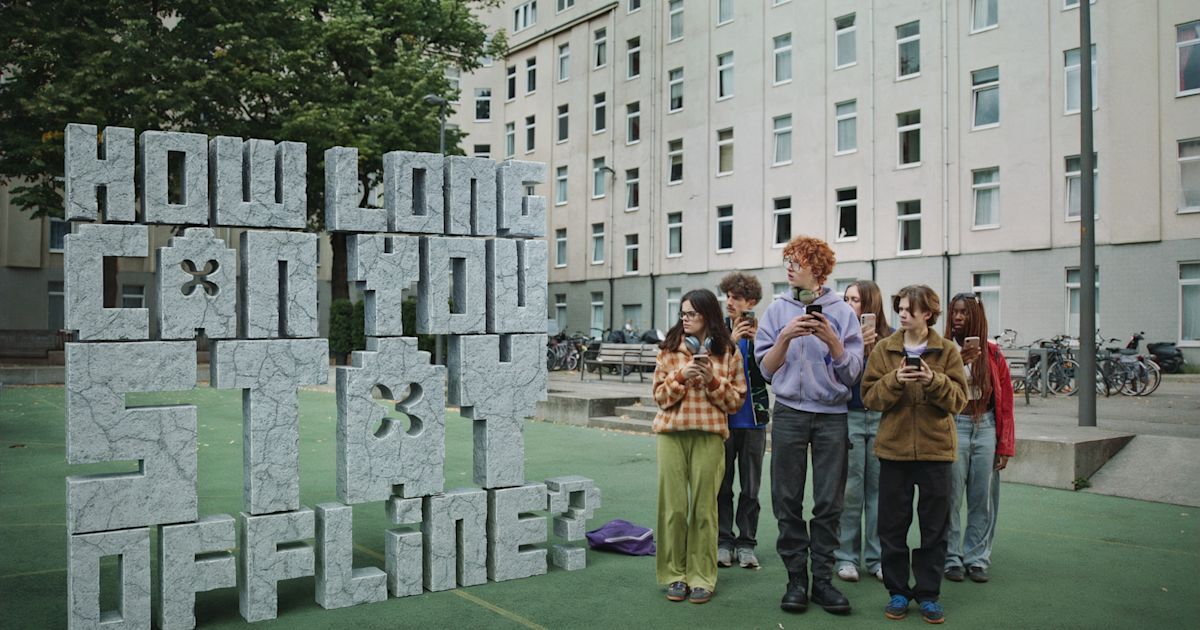

Proximus Hide-and-Seek
Influencer MarketingAKQA built Proximus a game teenagers could only win by staying offline, and the agency reports 1.3M interactions throughout social media including Snapchat, TikTok and Meta.
Case in 60 seconds
Proximus faced a market in which smartphones had become increasingly addictive and parents were losing a constant battle over teenage screen time, while schools across Belgium's Flanders region moved to enforce smartphone bans.
The campaign appears to turn on the observation that a hyper-connected generation responds to a dare rather than a lecture, because disconnection framed as a winnable game carries status that abstinence does not.
Outsmarting the screen, an online game that could only be won by going completely offline, with an incoming text message from Proximus set deliberately as the trap that ended a player's run.
AKQA developed the concept and campaign strategy, produced DOOH, online video and social content tuned to teenage visual style and language, and built the platform where teens registered, logged participation and submitted creative offline experiences. The agency also ran a national PR strategy and partnered with youth influencers and content creators to promote the challenge, with creative agency SILK and the Gezinsbond Association coordinated alongside Proximus.
AKQA reports 1.3M interactions throughout social media including Snapchat, TikTok and Meta, 60% of players staying offline, 46% of participants registering via influencers and a 15% increase in brand perception.
Strategy Breakdown
The primary strategy-learning section — interpretation, not a press-release summary.
Creative & Execution System
Assets & channels
- Snapchat
- TikTok
- Meta
Partners
- AKQA (lead_agency), SILK (unspecified)
Participation mechanic
- Teens signed up on a Proximus platform, went completely offline and tried to evade a trap set on purpose, an incoming text message from Proximus; once the digital silence broke, players logged their participation and submitted their offline experiences, with the most creative entries rewarded with theme park tickets, cinema passes and exclusive national team football match tickets.
Results & Evidence
| Metric | Value | Result type |
|---|---|---|
| social media interactions | 1.3M Interactions throughout social media including Snapchat, TikTok and Meta | engagements |
| players that stayed offline | 60% Players that stayed offline during the challenge | performance |
| participants registered via influencers | 46% Participants registered via our influencers | performance |
| increased brand perception | 15% Increased brand perception | performance |
| youngsters engaged with social content | 40% Youngsters that engaged with our social content introducing the challenge | performance |
| players claiming they reconnected | 50% Players claiming they reconnected with nature, family and friends, and became more productive | performance |
Why AKQA's strategy worked
- 1
A restriction becomes participable when it is given a losing condition, because the trap message turned staying offline into a game state a player could forfeit rather than a rule a teenager was asked to obey.
- 2
Creator partnerships can carry the registration load rather than only awareness, since AKQA reports 46% of participants registered via influencers, which places peer voices at the point of sign-up instead of at the top of the funnel.
- 3
Building a submission step into the mechanic converts a behaviour campaign into a source of first-party accounts, which is what allowed the brand to report 50% of players claiming they reconnected with nature, family and friends.
- 4
An advocacy partner supplies the permission a category cannot grant itself, because a telecom provider arguing for less connectivity reads as opportunistic until a family organisation such as Gezinsbond stands alongside it.

Results
10M+
Views
5M+
Impressions
20K+
New followers

Results
51.7M+
Total views
2.9M+
Interactions
17.7%
Engagement rate