
Victim Fashion
Influencer MarketingA youth rail-safety campaign disguised as a fashion label, seeded by influencers and revealed at an Amsterdam fashion show for Dutch rail operator ProRail.
About the campaign
Railway deaths in the Netherlands almost tripled between 2016 and 2018, reaching 17 fatalities in 2018, and most victims were teenagers who ignored conventional safety PSAs. Public safety messaging from a government infrastructure operator is easy for teenagers to tune out, and previous efforts had not stopped casualties from rising. Ogilvy's insight was that teenagers are hard to reach and even harder to impress but pay close attention to fashion drops and influencer hype, so the safety message had to arrive inside that culture.
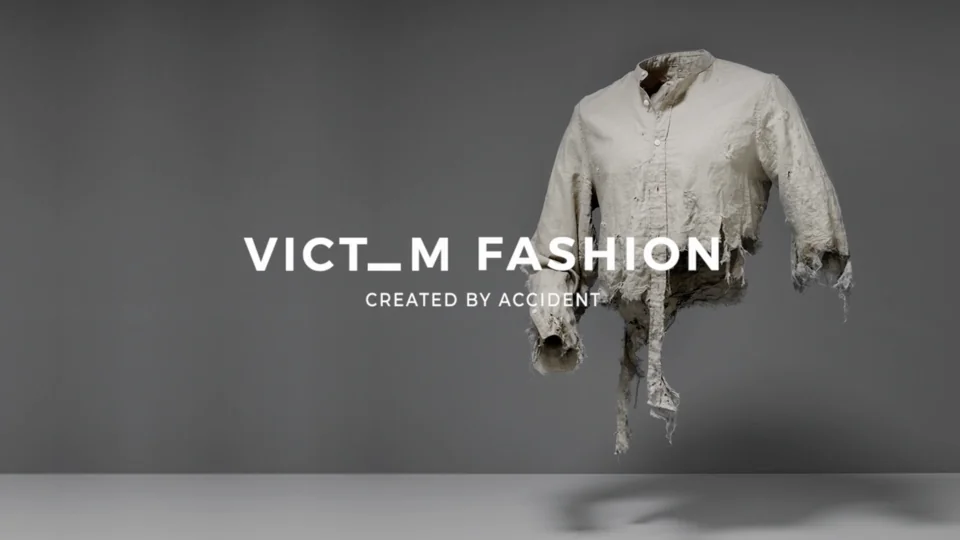
Victim Fashion, created by accident, was a fake fashion label whose collection replicated the torn clothing real victims wore when their railway accidents happened. Influencers briefed in on the project teased the label with unboxing videos, followers were invited to an Amsterdam fashion show in April 2019, and the truth was revealed live in front of press, cameras and key influencers, with each garment's victim story published online.
The reveal mechanic did the persuasive work, earning attention under false pretences as fashion hype and converting it into a safety message in one public moment, with research among scientists, victims, young people and parents giving ProRail cover to defend the work when a government minister attacked it. It ran across Instagram, influencer content, a live event, earned media and print. Hundreds attended the reveal and the story reached BBC News and Forbes; the campaign won Gold at the Influencer Marketing Awards 2020, though no quantitative results were published.
Case in 60 seconds
Railway deaths in the Netherlands almost tripled between 2016 and 2018, and most victims were teenagers who ignored conventional safety PSAs.
Teenagers are hard to reach and even harder to impress, but they pay close attention to fashion drops and influencer hype, so the safety message had to arrive inside that culture.
Victim Fashion, created by accident: a fake fashion label whose collection replicated the torn clothing real victims wore when their railway accidents happened.
Influencers in on the project teased the label with unboxing videos, followers were invited to an Amsterdam fashion show in April 2019, and the truth was revealed live in front of press, cameras and key influencers, with each garment's victim story published online.
Hundreds of teenagers and influencers attended the reveal, the story made national and international headlines including BBC News and Forbes, and Adformatie reported the campaign reached 700,000 young people before political criticism brought it to an early end. It also won Gold at the Influencer Marketing Awards 2020.
Strategy Breakdown
Creative & Execution System
Assets & channels
- Fashion collection of replica victim clothing with online victim stories, including on Instagram
- Influencer unboxing and teaser videos ahead of launch
- Launch event staged as an Amsterdam fashion show
- Case film hosted on Vimeo
- Print executions released in April 2019
Partners
- Ogilvy Social.Lab Amsterdam
- Influencers briefed in on the project
- Secondary influencers invited as guests
Participation mechanic
- Followers and secondary influencers were invited to the launch event
- Garment pages told each victim's story to anyone who engaged with the label online
Creator role
- Hype the fake label pre-launch with close-ups of the distressed clothing in unboxing videos
- Attend the reveal and carry the safety message to their audiences afterwards
Results & Evidence
| Metric | Value |
|---|---|
| Youth Reach | 700,000 |
Awards & Recognition
| Award show | Year | Category | Result |
|---|---|---|---|
| Influencer Marketing Awards | 2020 | Most Creative Influencer Campaign | Gold |
| Influencer Marketing Awards | 2020 | Grand Prix | Grand Prix |
| Cresta Awards | 2020 | Ambient and Experiential, Experiential campaign | Bronze |
| Cresta Awards | 2020 | Craft, Outstanding Art Direction (billboards/poster) | Bronze |
| ADCN | Not stated | Craft, Art Direction | Bronze |
| ADCN | Not stated | Next, Impact | Bronze |
| Spin Awards | Not stated | Social Business | Silver |
Why Ogilvy's strategy worked
- 1
Packaging a safety message as a credible fashion drop earned attention from an audience that ignores conventional PSAs.
- 2
Influencers worked as narrative devices in a staged reveal rather than as product endorsers, which the agency's ECD framed as influencer marketing used for good.
- 3
A single live reveal moment, staged for press and influencers together, converted borrowed hype into earned coverage that travelled far beyond the target audience.
- 4
Grounding the provocation in research with scientists, victims, young people and parents gave the client cover to defend the work when a government minister attacked it.
- 5
Real victim stories made the stakes concrete, but they are also what made the campaign politically contentious.
Results
10M+
Views
5M+
Impressions
20K+
New followers
Results
51.7M+
Total views
2.9M+
Interactions
17.7%
Engagement rate