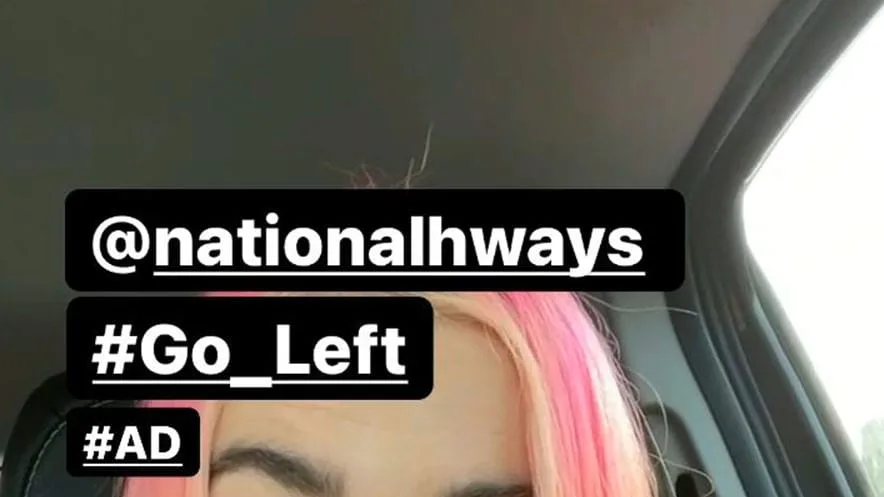

National Highways #GoLeft Disabled Creator Campaign
Influencer MarketingPurple Goat Agency ran a two-phase influencer campaign with 16 disabled creators for National Highways, which the agency reports recorded 8.3M impressions across social media.
Case in 60 seconds
National Highways wanted drivers to know what to do after a motorway breakdown, particularly on smart motorways without a hard shoulder, while disabled drivers faced additional challenges and uncertainty that traditional communications often overlooked.
The page frames the gap as one of access and trust rather than missing advice, because disabled drivers are often underserved by traditional public information campaigns, so trusted voices from the disability community could carry the guidance.
Purple Goat built the work around disabled creators as the messengers for the #GoLeft breakdown guidance, so the advice arrived through lived experience and accessible formats rather than through official channels alone.
Purple Goat partnered with 16 disabled creators on Facebook, Instagram and TikTok in two phases, using polls and audience questions to find misconceptions before creators shared practical #GoLeft breakdown guidance, including British Sign Language (BSL) content.
Purple Goat reports 8,284,096 impressions, 4,130,338 engagements and 34,717 clicks from 166 pieces of content, and says the work raised awareness of motorway breakdown procedures and improved confidence among disabled drivers.
Strategy Breakdown
Creative & Execution System
Assets & channels
- TikTok
Partners
- Purple Goat Agency
Participation mechanic
- In the first phase, audiences answered polls and audience questions that surfaced misconceptions and knowledge gaps, and those answers shaped the safety content creators published in the second phase.
Results & Evidence
| Metric | Value |
|---|---|
| Impressions | 8.3M impressions |
| Engagements | 4.1M engagements |
| Clicks | 34.7K clicks |
| Influencers | 16 influencers |
| Pieces of Content | 166 pieces of content |
Why Purple Goat Agency's strategy worked
- 1
Running a listening phase before the content phase lets a public safety brief answer the misconceptions an audience actually holds, because polls and audience questions set the agenda rather than an assumed information gap.
- 2
Accessible formats such as British Sign Language content widen who can act on safety advice, so inclusion built into the format does part of the distribution work rather than sitting as an add-on.
- 3
Casting creators from the community being served lends public information the credibility of lived experience, which matters most where that audience is underserved by traditional public information campaigns.
Results
868K+
Total views
318%
Views vs baseline
28.6K
Creator video views
Results
27.6K
Likes
2.47M
Reach
970
Comments

Results
6.5x
Paid roas
60.8M
Impressions
+429%
Purchases yoy