
KFCero Waste
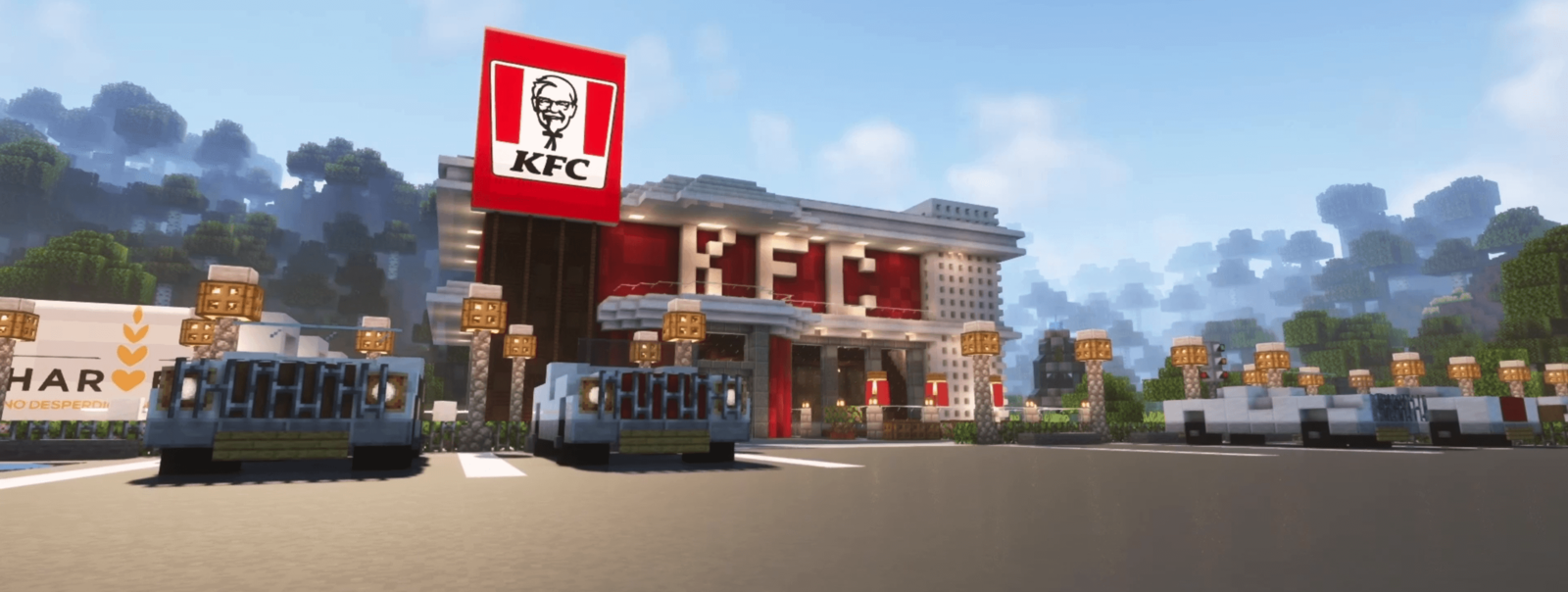
Influencer MarketingKFC Mexico built a custom Minecraft parkour mod where Gen Z players rescued virtual chicken before it spoiled, converting every in-game donation into a real meal for Mexican food banks.
About the campaign
Mexico wastes one in three food items produced while 28.8 million people live in food deprivation, yet KFC's core audience of late millennials and Gen Z was largely unaware of the crisis, and QSR brands face instant scepticism when they lecture on sustainability. Edelman found the bridge in a behaviour those audiences already had: Minecraft players manage food conservation as a core game loop, so rescuing food required no new habit, only a re-contextualisation.
For World Food Day, KFCero Waste launched a custom Minecraft parkour mod in which players carried KFC chicken pieces to an in-game food bank before they spoiled, with every successful virtual donation triggering a real meal for the Red de Bancos de Alimentos de Mexico; all KFC Delivery transactions during the activation were donated too. Gaming influencers livestreamed the mod on Twitch and turned the mission into a parkour tournament, while KFC Harvest messaging appeared along the route via in-game billboards, Colonel Sanders interventions and 26 UI checkpoints, framing the work within the UN's Zero Hunger goal.
Edelman reports more than 26,000 virtual chicken pieces donated, equivalent to over 13,000 real meals, 139,000 US dollars contributed to the food bank network, 80-plus hours of gameplay and influencer reach above 1.6 million; all figures are agency self-reported.
Case in 60 seconds
In Mexico, 28.8 million people live in food deprivation while one in three food items produced is wasted, yet KFC's primary audience — late millennials and Gen Z — were described as largely unaware of this reality.
Minecraft already requires players to manage food conservation in-game, yet that same audience was disengaged from the real-world food waste crisis — a ready-made behavioural bridge existed between virtual habit and real action.
Transform World Food Day into a Minecraft experience: a custom parkour mod where players carried KFC chicken pieces to an in-game food bank before they spoiled, with every successful virtual donation triggering a real-world food donation.
Gaming influencers and their communities joined and livestreamed the mod on Twitch, turning the mission into a parkour tournament. Along the in-game route, KFC Harvest messages appeared via billboards, Colonel Sanders interventions, and 26 UI checkpoints. All transactions made through KFC Delivery during the activation were donated to institutions in the Red de Bancos de Alimentos de México.
The campaign generated 26K+ virtual chicken pieces donated, equivalent to more than 13,000 real meals, plus 5,727+ Twitch viewers and 80+ hours of gameplay. All figures are agency self-reported.
Strategy Breakdown
The primary strategy-learning section — interpretation, not a press-release summary.
Creative & Execution System
Assets & channels
- Custom Minecraft parkour mod (bespoke map and game modification)
- 26 in-game UI checkpoints featuring KFC Harvest messaging
- In-game Colonel Sanders interventions and billboard placements
- Twitch livestream broadcasts by gaming influencers
- KFC Delivery channel (transactions donated during activation)
Partners
- Edelman (lead agency, strategy and execution)
- Red de Bancos de Alimentos de México (donation recipient and partner)
- Gaming influencers on Twitch (distribution and participation, names not disclosed in sources)
Participation mechanic
- Players entered the custom Minecraft map and were tasked with carrying KFC chicken pieces to the in-game food bank before the food spoiled within a set time limit
- Each successful in-game food donation triggered a real-world donation to Mexican food banks
- All KFC Delivery transactions during the campaign period were donated to Red de Bancos de Alimentos de México
- Twitch streamers invited their communities to join the parkour tournament, extending participation beyond the initial influencer audience
Creator role
- Top gaming influencers joined the mod and livestreamed their gameplay on Twitch
- Creators invited their communities to participate, acting as primary distribution and community mobilisation channels
Results & Evidence
| Metric | Value | Result type |
|---|---|---|
| Virtual chicken pieces donated in-game | 26,000+ | Engagement |
| Real-world meals donated | 13,000+ | Social Impact |
| Twitch viewers | 5,727+ | Reach |
| Hours of gameplay | 80+ | Engagement |
Why Edelman's strategy worked
- 1
Mapping a real-world cause onto an in-game behaviour that players already practise — food conservation in Minecraft — removed the need to teach a new habit and lowered the participation barrier for Gen Z audiences. Edelman's own framing centred this bridge between virtual and real as the core strategic insight.
- 2
Tying a concrete, quantifiable real-world outcome (one meal donated per virtual rescue) to each action gave players an immediate and legible reason to complete the mission, making the cause feel personal rather than abstract.
- 3
Recruiting gaming influencers to livestream the mod on Twitch extended the activation into communities that KFC could not have reached through owned channels alone, with the creators' audiences serving as the primary distribution engine alongside the reported 5,727 Twitch viewers.
- 4
Integrating KFC's existing Harvest surplus-food-recovery program gave the activation a credible operational foundation rather than requiring a new sustainability claim, reducing the risk of greenwashing perception.
- 5
Tying KFC Delivery transactions to donations during the campaign window created a second participation layer beyond gaming, allowing non-gamer customers to contribute and broadening the activation's total impact.
- 6
Based on the available evidence, the pattern — mapping a real cause onto an existing in-game mechanic, then converting virtual action into physical donations — appears repeatable: a closely related Hellmann's activation used the same logic on Twitch with FareShare UK as the recipient partner.
Results
+700
Claims per day
11%
Sales increase
800%
Claims increase vs traditional insurers
Results
1.7M
Engagements
41.1M
Impressions
145%
Assets delivered