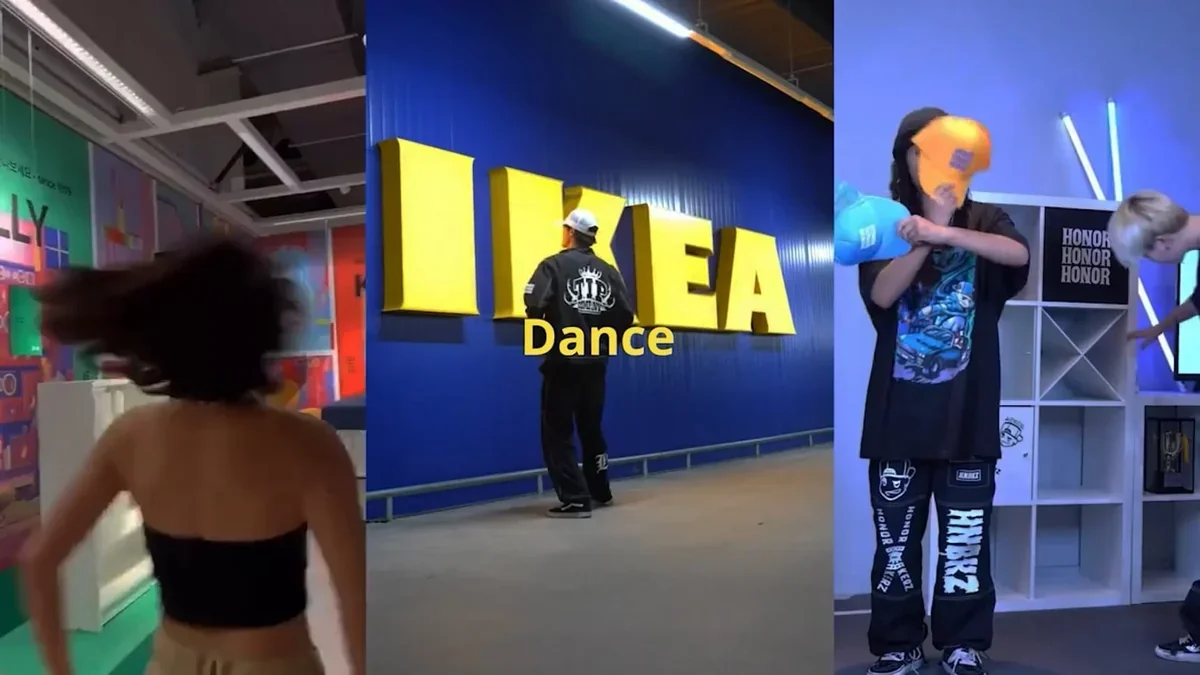

IKEA x Whalar: Build the Flatpack
Influencer MarketingWhalar seeded an original IKEA pop track across 43 creators in 16 markets, turning a branded song into 41,000+ user posts and 248.3M views on TikTok.
About the campaign
IKEA wanted to build relevance with Gen Z, a budget-conscious audience deliberate about furniture spending and hard to reach through traditional advertising, in a category that gives young people few organic reasons to create or share content about a furniture retailer. Whalar found the answer in an unlikely credential: Sweden, IKEA's home country, has a globally recognised pop-music heritage, giving the brand a culturally credible reason to release its own TikTok-native track.
The agency commissioned an original pop song, Build the Flatpack, referencing IKEA products including the BILLY Bookcase, and positioned it as the soundtrack of an IKEA summer festival on TikTok under #IKEAFestival, betting on the platform behaviour that a strong, reusable sound is the central mechanism for turning branded content into wider participation. Forty-three creators across 16 markets used the track as the throughline for a three-episode before, during and after home transformation series in POV and storytelling formats, encouraging stitches, covers and imitations, while IKEA gave the song in-store airplay across its locations.
Whalar's self-reported figures show 248.3 million total views, 285 million streams, 52,000 hours of watch time, 2.2 million engagements and more than 41,000 uses of the sound in user posts.
Case in 60 seconds
IKEA wanted to build relevance with Gen Z, an audience identified as budget-conscious and deliberate about furniture spending, that was hard to reach with traditional advertising.
Sweden, IKEA's home country, has a globally recognised pop-music heritage, giving IKEA a culturally credible reason to release a TikTok-native track — and on TikTok a strong, reusable sound is the central mechanism for turning branded content into wider participation, as Whalar's strategy framing describes.
Commission an original pop song, 'Build the Flatpack', referencing IKEA products including the BILLY Bookcase, and position it as the soundtrack of an IKEA summer festival (#IKEAFestival) on TikTok.
Forty-three creators across 16 markets used the track as the throughline for a three-episode before/during/after home transformation series in POV and storytelling formats, encouraging stitches, covers and imitations; IKEA also gave the track in-store airplay across its locations.
According to Whalar's self-reported figures, the campaign generated 248.3M total views, 285M total streams, 52K hours of watch time, 2.2M engagements, and more than 41,000 uses of the sound in user posts. All figures are agency-reported and not independently verified.
Strategy Breakdown
Creative & Execution System
Assets & channels
- Original pop song 'Build the Flatpack' (central asset, references BILLY Bookcase and other IKEA products) — source
- Three-episode creator video series (before/during/after home transformation format) on TikTok — source
- #IKEAFestival TikTok hashtag — source
- In-store airplay of the track across IKEA locations — source
Partners
- Whalar (lead agency, creator partnerships and strategy) — source
Participation mechanic
- Creators seeded the track and transformation format to their audiences — source
- Audience participation via stitches, covers, imitations and use of the sound in original posts — source
- Repeatable before/during/after narrative gave users a clear format to copy — source
Creator role
- 43 creators localised content for their own audiences across 16 markets — source
- Creators used POV and storytelling formats to model the participation mechanic — source
- Creators acted as primary distribution mechanism for both the track and the brand message — source
Results & Evidence
| Metric | Value |
|---|---|
| TikTok Reach | 50M |
| Total Views | 248.3M |
| Total Streams | 285M |
| Watch Time | 52K hours |
| Sound Uses in User Posts | 41K+ |
| Creator Engagements | 2.2M |
Why Whalar's strategy worked
- 1
Putting a reusable creative asset — a song — at the centre gave audiences a concrete reason to participate, rather than asking them to engage with a message alone. The track's references to specific IKEA products (including the BILLY Bookcase) kept it branded without making it inaccessible.
- 2
The before/during/after home transformation format gave creators a repeatable, localise-able structure. This made it practical to roll out across 16 markets with 43 creators without losing narrative coherence.
- 3
Grounding the track in Sweden's pop-music heritage gave IKEA a culturally specific rationale for releasing original music, reducing the risk that the move would read as arbitrary brand behaviour.
- 4
Using creators as the primary distribution mechanism, rather than paid media, meant the track reached communities with existing trust in those creators before any broader organic spread. The reported 41,000+ sound uses suggest the seeding phase successfully transferred the track into wider platform circulation.
- 5
Reinforcing the track with in-store airplay extended the owned asset beyond TikTok, creating a connection between the digital campaign and the physical retail environment — a channel that reaches audiences already in a purchase frame of mind.
- 6
Framing the campaign as #IKEAFestival gave it a seasonal, event-like identity that is easier for creators and audiences to adopt than a generic brand hashtag.

Results
51.7M+
Total views
2.9M+
Interactions
17.7%
Engagement rate

Results
10M+
Views
5M+
Impressions
20K+
New followers