
FiftyFifty
Influencer MarketingIKEA and Edelman turned International Women's Day 2021 into a free Instagram Stories card game prompting households to talk openly about unequal domestic work.
About the campaign
Research cited by Edelman and OECD findings showed women do up to three times more unpaid care and domestic work than men, an imbalance the pandemic only deepened as households shifted to remote work and online schooling. IKEA's challenge was that home goods brands speaking on gender equality risk looking performative on International Women's Day, and the behaviour change it wanted requires every member of a household to engage rather than retreat into opposing camps.
Edelman's answer was FiftyFifty, a free digital card game built natively inside Instagram Stories that turned a difficult conversation into play, lowering the emotional stakes and surfacing assumptions without assigning blame. Working with relationship expert Jennie Miller, the team converted psychoanalytical questions into conversation starters covering topics like best and worst home habits and favourite and least favourite chores, grounded in a Globescan report spanning 17 markets, IKEA primary research and psychologist interviews.
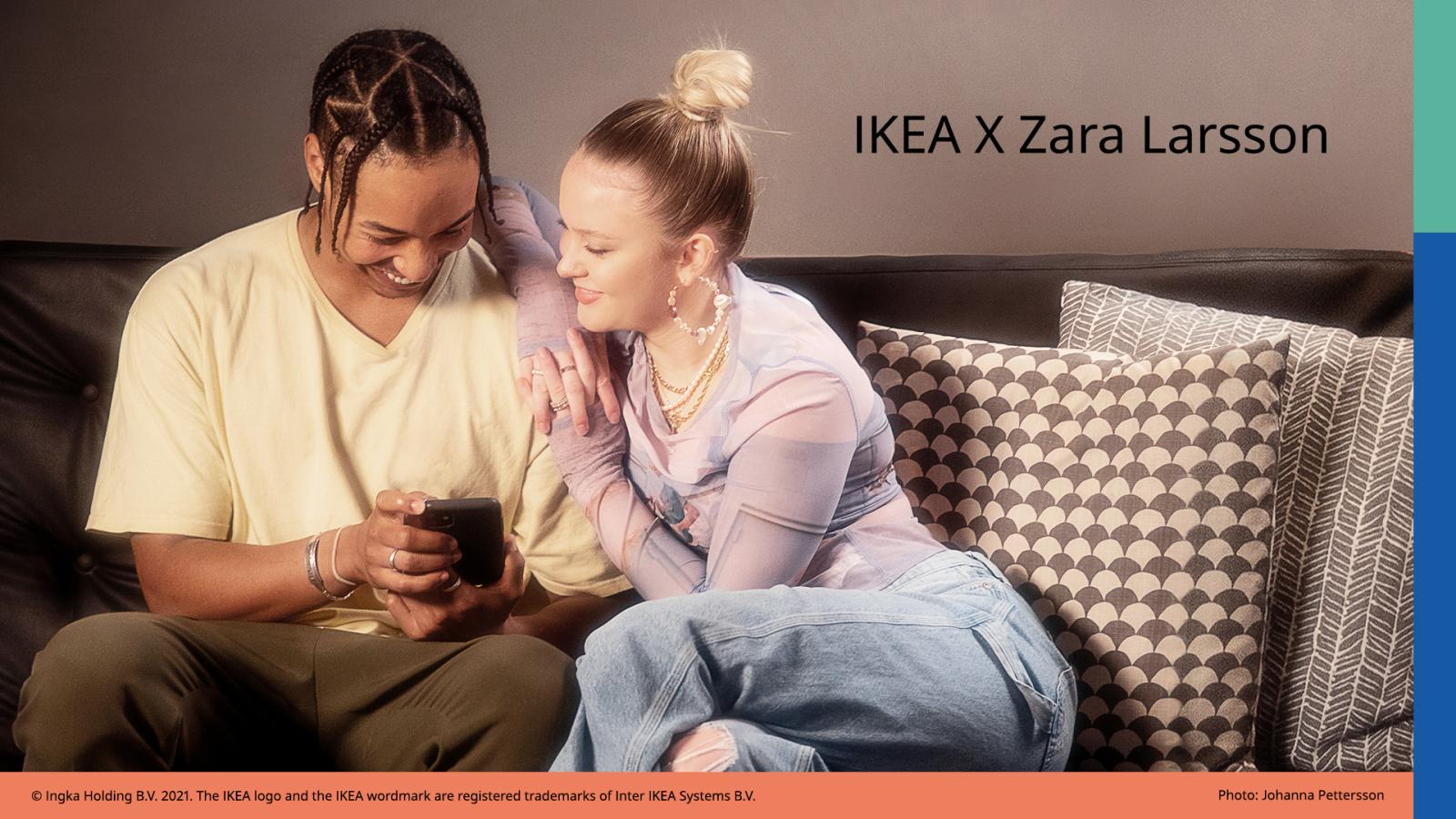
The game launched on 8 March 2021, with Swedish singer and gender equality activist Zara Larsson promoting it on her own channels and playing it with her boyfriend. FiftyFifty was adapted for 25 markets and retained permanently as an IKEA Instagram Highlight, and was named a finalist in the Stories category at the 14th Shorty Awards; quantified performance figures were not publicly reported.
Case in 60 seconds
Research cited by Edelman and OECD findings showed women do up to three times more unpaid care and domestic work than men, an imbalance the Covid-19 pandemic worsened as households shifted to remote work and online schooling.
The gender debate is often divisive, yet changing household behaviour requires all members to engage with the issue together. Turning a difficult conversation into a game lowers the emotional stakes and invites honest dialogue without blame.
FiftyFifty positioned IKEA as the brand that believes an equal home is a better home, using a free digital card game to give every household a low-friction starting point for the conversation.
Working with relationship expert Jennie Miller, the team converted psychoanalytical questions into playful conversation starters — covering topics such as best and worst home habits and favourite and least favourite chores — and delivered them natively inside Instagram Stories on 8 March 2021. Swedish singer and gender equality activist Zara Larsson promoted the game on her own channels and played it with her boyfriend.
The campaign was adapted for 25 markets and retained permanently as an IKEA Instagram Highlight. It was named a finalist in the Stories category at the 14th Annual Shorty Awards. Quantified performance figures were not publicly reported.
Strategy Breakdown
Creative & Execution System
Assets & channels
- Instagram Stories card game (primary format)
- IKEA owned Instagram account and Highlights
- Zara Larsson's social channels for amplification
- IKEA social and owned platforms across 25 markets
Partners
- Edelman (lead agency)
- Jennie Miller (relationship expert and creative collaborator)
- Zara Larsson (celebrity partner and gender equality activist)
Participation mechanic
- Players tap through Instagram Stories to receive and answer question cards covering topics such as best and worst home habits and favourite and least favourite chores
- Questions are answered from each player's own perspective, designed to surface assumptions rather than assign blame
- The Stories interface was designed to feel like a physical card game
- Game retained permanently as a saved Instagram Highlight for ongoing access
Creator role
- Zara Larsson acted as amplifier and on-screen talent, promoting the launch film on her own channels and demonstrating the game by playing it with her boyfriend
- Jennie Miller contributed expert credibility to the question design rather than a public-facing creator role
Awards & Recognition
| Award show | Year | Category | Result |
|---|---|---|---|
| Shorty Awards | 2022 | Stories (14th Annual) | Finalist |
Why Edelman's strategy worked
- 1
Reframing a sensitive subject as a game rather than a lecture lowered resistance. Turning psychoanalytical questions into playful conversation starters made it easier for households to raise an uncomfortable topic without triggering defensiveness.
- 2
Building natively inside an existing platform format — Instagram Stories — removed adoption friction and made cross-market adaptation straightforward, supporting the 25-market rollout and the always-on Highlights format without requiring a separate app or microsite.
- 3
Pairing an expert voice with a relevant celebrity advocate linked credibility with reach. Jennie Miller's input gave the questions psychological grounding, while Zara Larsson's participation provided cultural relevance and a relatable demonstration of the game in use.
- 4
Anchoring the campaign in third-party research — including OECD data and a Globescan 17-market report — gave IKEA's advocacy a factual basis that moved the brand beyond performative cause-washing.
- 5
Designing the game as a permanent Instagram Highlight, rather than a campaign that disappears after International Women's Day, extended the active life of the asset and signalled that the brand's commitment was ongoing rather than seasonal.

Results
10M+
Views
5M+
Impressions
20K+
New followers

Results
51.7M+
Total views
2.9M+
Interactions
17.7%
Engagement rate