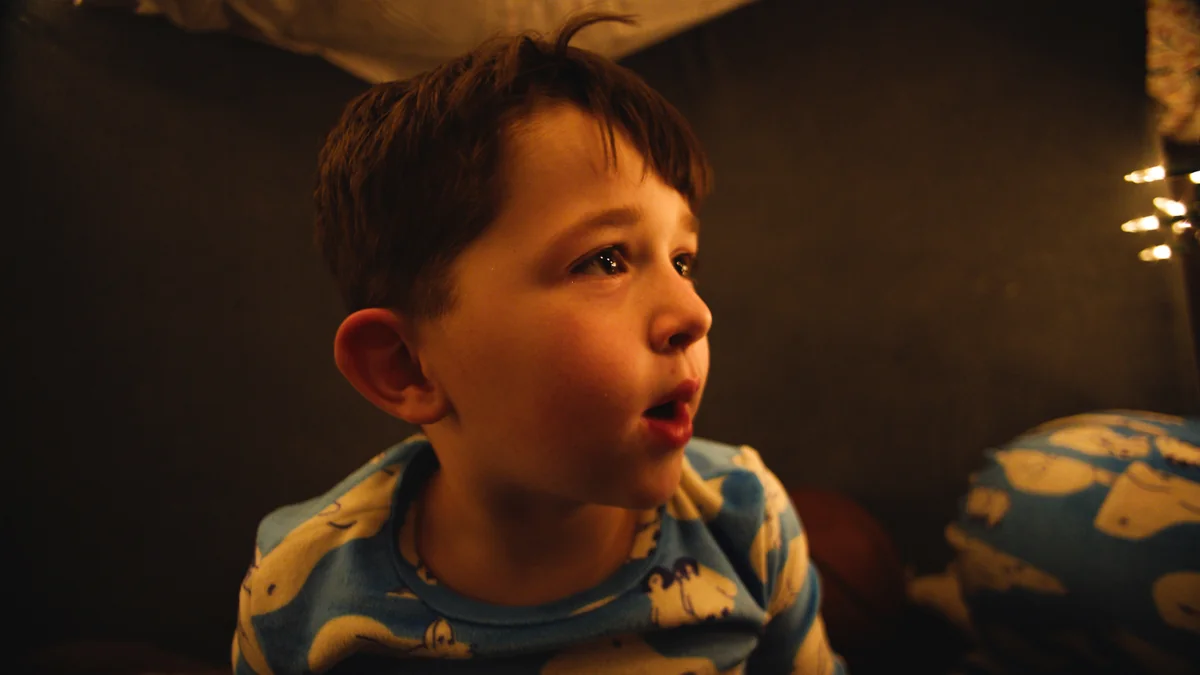

Crayola: Campaign For Creativity (Returning Creativity)
Influencer MarketingDentsu Creative reunited adults with their own archived childhood artwork to close the gap between valuing creativity and feeling creative, generating 6B+ reported impressions.
About the campaign
Research with the Ad Council Research Institute handed Crayola a striking contradiction: 90% of parents recognised the value of creativity in their children's development, yet 56% of adults no longer considered themselves creative, and that gap undermines parents' confidence in nurturing creative behaviour at home. Dentsu Creative New York made the abstract personal by reaching into Crayola's 40-year archive of never-returned children's artwork and turning it into the engine of a nationwide search.
The 2024 platform launched with a short film documenting the return of three archived pieces to their now-adult creators, then invited the public to help solve the mystery, sharing each artwork's first name, year and location across social media, Times Square billboards and local news, so the campaign became a collective act rather than a broadcast. The search culminated in a New York gallery show where artists were reunited with their childhood work, with a TikTok influencer component extending the mechanic to new audiences.
The agency reports more than 1 billion total impressions, 136K-plus hours of YouTube watch time, around 1,000 earned media, PR and TV placements, and 4.1 million TikTok influencer impressions with $186,000 in earned media value; the work went on to win two D&AD Wood Pencils in 2025.
Case in 60 seconds
Research with the Ad Council Research Institute found that 90% of parents recognised the value of creativity in their children's development, yet 56% of adults said they no longer considered themselves creative, and over 60% of parents were unsure whether their children engaged in enough creative activity.
Parents who have lost their own connection to creative expression struggle to pass it on to their children. Reconnecting adults with a tangible object from their own creative past — their childhood drawings — could reignite that sense of creative identity.
Dentsu Creative turned Crayola's 40-year-old, never-returned archive of children's artwork into the engine of a nationwide search, reuniting adults with their own childhood pieces to make the abstract value of creativity personal and immediate.
The platform launched with a short film documenting the return of three archived artworks to their now-adult creators, followed by a public crowdsourcing search across social media, Times Square billboards, and local news, sharing each work's first name, year, and location. The search culminated in a New York gallery show where artists were reunited with their work, supported by a TikTok influencer component.
The campaign generated 6B+ total impressions, 136K+ hours of YouTube watch time, and 1K earned media, PR, and TV placements (all agency-reported). The work won two D&AD Wood Pencils in 2025 and was entered at The One Show 2025 in Direct Marketing.
Strategy Breakdown
Creative & Execution System
Assets & channels
- Short film (YouTube) documenting the return of three archival artworks to adult creators
- Times Square billboards displaying individual artworks with name, year, and location to crowdsource identification
- Social media posts sharing archival artworks and search details
- Local news coverage as earned distribution for the search
- New York gallery show as the live culmination and reunion event
- TikTok influencer content to extend search reach
Partners
- Dentsu Creative New York (lead creative and production agency, credited at The One Show and D&AD)
- Ad Council Research Institute (research partner for audience insight)
Participation mechanic
- Public crowdsourcing: viewers invited to help identify childhood artwork creators using name, year, and location shared across channels
- Gallery reunion: identified artists reunited with their work at a New York gallery show
Creator role
- TikTok influencers used as amplifiers to extend the search mechanic to new audiences; not co-creators of the core idea
Results & Evidence
| Metric | Value |
|---|---|
| Total Impressions (All Channels) | 6B+ |
| Earned Media Placements | 1K |
| PR and TV Impressions | 4M+ |
| YouTube Watch Time | 136K+ hours |
| TikTok Influencer Impressions | 4.1M |
| TikTok Engagements | 102K+ |
| TikTok Earned Media Value | $186,000 |
Awards & Recognition
| Award show | Year | Category | Result |
|---|---|---|---|
| D&AD Awards | 2025 | Not specified in source (campaign entered as Returning Creativity) | Wood Pencil (x2) |
| The One Show | 2025 | Direct Marketing | Entered (result not confirmed in package) |
Why Dentsu Creative's strategy worked
- 1
A dormant brand archive can become a campaign asset when it carries personal meaning for individuals. Crayola's 40-year collection of never-returned children's artwork gave the campaign a unique, ownable device that no competitor could replicate.
- 2
Pairing a research-backed problem statement with an emotional mechanic gives advocacy campaigns both credibility and feeling. The Ad Council Research Institute data supplied the 'why it matters' argument; the artwork reunion supplied the human proof.
- 3
Framing a campaign as a mystery or public search creates a participation reason that travels across channels. Sharing each artwork's name, year, and location invited the public to contribute to the resolution, turning passive viewers into active participants.
- 4
Earned-first distribution — local news, PR placements, organic social — can multiply paid reach. The 1K placements and 4M+ PR and TV impressions (agency-reported) suggest the news hook of the search generated coverage beyond paid media spend.
- 5
A live event (the New York gallery reunion) provided a tangible, photographable culmination that sustained the earned media narrative beyond the initial launch, a repeatable structure for campaigns built on a search or reveal mechanic.
- 6
Using TikTok influencers as amplifiers of an existing mechanic — rather than as the originating idea — kept the creative integrity of the archive-reunion device intact while extending channel reach to younger or digitally native segments.
Results
10M+
Views
5M+
Impressions
20K+
New followers

Results
51.7M+
Total views
2.9M+
Interactions
17.7%
Engagement rate