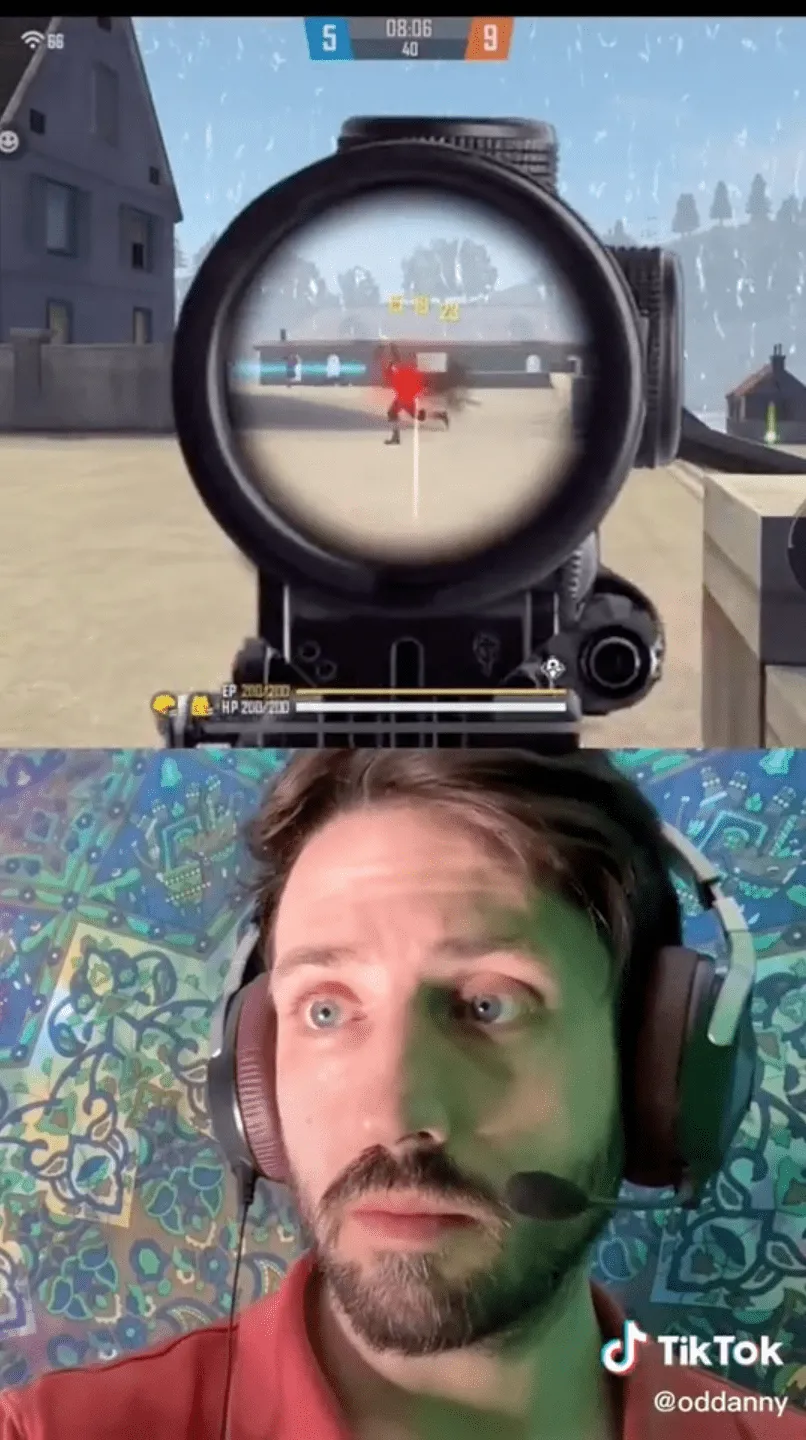

Generated over 5.5 million views for Free Fire in the U.S.
Influencer MarketingObviously recruited gaming creators to produce Free Fire gameplay content on YouTube and TikTok, reporting over 5.5 million views and 12,700+ app store clicks in untapped US markets.
About the campaign
Free Fire, a mobile battle royale game with a large global player base the agency puts at some 80 million daily active players, needed brand awareness in US target markets Obviously describes as untapped. Despite its global scale and high-profile partnerships, the game lacked comparable presence in the US, and mobile titles competing for US players struggle to build credibility through brand advertising alone.
Obviously worked from the view that US gaming audiences already watch gameplay content from creators they trust, so the agency recruited gaming creators to produce user-generated Free Fire gameplay content rather than run brand-side advertising. The creators made gameplay videos that ran on YouTube and TikTok aimed at US audiences, with Free Fire featuring as the subject of the content rather than as the advertiser.
Recruiting creators who already make gaming content kept the output native to how US gaming audiences discover new titles, and pairing YouTube with TikTok covered both long-form viewing and short-form discovery. Obviously reports over 5.5 million views and 12,700 app store clicks across 70 unique videos; the results are self-reported, appearing in the agency's own case study with no independent corroboration, and no engagement, install or revenue figures are disclosed, so effectiveness beyond claimed reach cannot be assessed.
Case in 60 seconds
Free Fire, a mobile battle royale game with a large global player base, needed brand awareness in US target markets the agency describes as untapped.
Based on the agency's framing, US gaming audiences already watch gameplay content from creators they trust, so creator-made content could reach viewers the brand's own channels had not.
Recruit gaming creators to produce user generated content of Free Fire gameplay rather than run brand-side advertising.
Recruited creators produced gameplay videos that ran on YouTube and TikTok, aimed at US audiences.
The agency reports over 5.5 million views. No engagement, install, or revenue figures are disclosed, and no independent source verifies the claim.
Strategy Breakdown
The primary strategy-learning section — interpretation, not a press-release summary.
Creative & Execution System
Assets & channels
- Creator-made gameplay videos
- YouTube
- TikTok
Partners
- Obviously (influencer marketing agency)
Participation mechanic
- Recruited gaming creators produced their own user generated gameplay content
Creator role
- Gameplay content production
Results & Evidence
| Metric | Value | Result type |
|---|---|---|
| Video views | 5.5M | reach |
| Clicks to app store | 12.7K | traffic |
Why Obviously's strategy worked
- 1
Creator-made gameplay content gives a game with global scale a route into a market where it lacks local brand presence.
- 2
Recruiting creators who already produce gaming content keeps the output native to how US gaming audiences discover new titles.
- 3
Pairing YouTube and TikTok covers both long-form gameplay viewing and short-form discovery.
- 4
A views-only headline limits what can be claimed; without engagement or install data the campaign can only be assessed as a reach claim.
Results
51.7M+
Total views
2.9M+
Interactions
17.7%
Engagement rate

Results
10M+
Views
5M+
Impressions
20K+
New followers