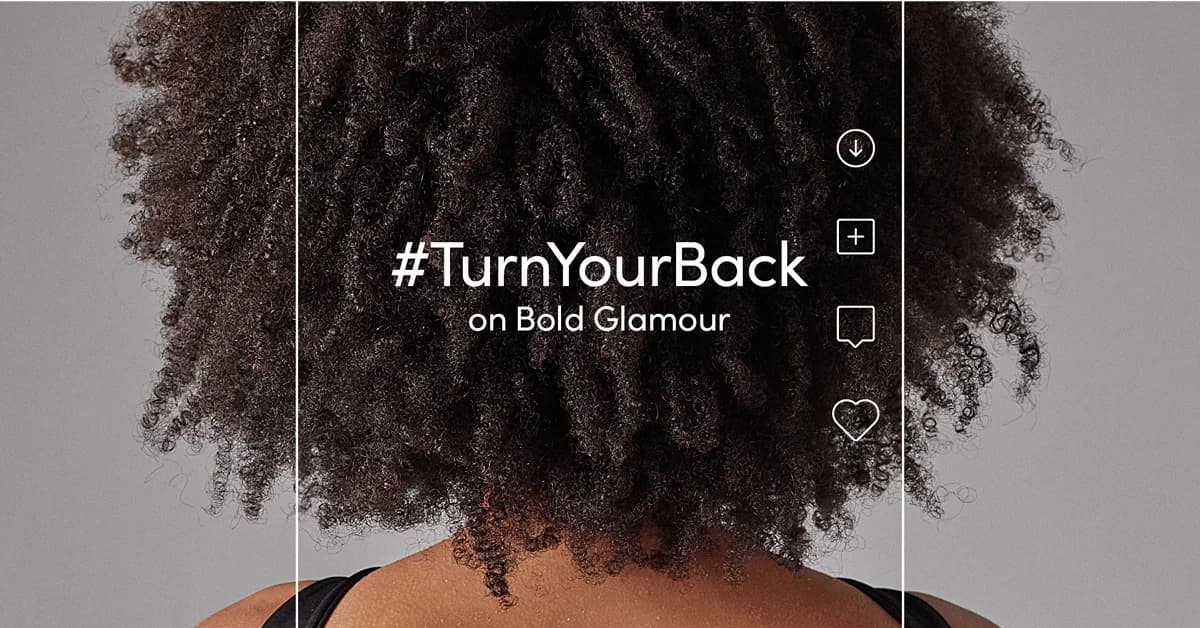

#TurnYourBack
Influencer MarketingDove asked TikTok users to turn their backs on the Bold Glamour AI filter, seeding one replicable action through 68 influencer partners.
About the campaign
TikTok's Bold Glamour filter, built on generative AI, airbrushed users' faces to one beauty standard so heavily that commentators warned it could harm mental health, and influencers were spreading it widely. A beauty brand opposing a viral beauty tool risks lecturing the platform culture it needs to reach, and a brand statement alone would not change usage behaviour. Ogilvy's insight was that because influencers had driven the filter's usage, only influencers could turn the tide, and participation had to be as easy as a dance challenge.
The idea was to ask people to turn their backs on Bold Glamour, literally, on camera, under the hashtag #TurnYourBack. Working with DAVID and Mindshare, Ogilvy had 68 influencer partners seed the format on TikTok, fronted by Gabrielle Union, who used the filter, said how it made her feel, then turned her back for others to copy.
The counter-trend worked because Dove's years-long No Digital Distortion and Self Esteem Project positions gave it standing to answer at speed, because the ask was one simple replicable physical action, and because the channel that spread the trend was recruited to reverse it. It ran across TikTok and earned press. WPP reports 54m video views, 567K+ engagements, a 94% positive sentiment rate in key markets and 174 pieces of press coverage; all figures are self-reported by the agencies' parent company, and there is no data on whether Bold Glamour usage actually fell.
Case in 60 seconds
TikTok's Bold Glamour filter, built on generative AI, airbrushed users' faces to one beauty standard so heavily that commentators warned it could harm mental health, and influencers were spreading it widely.
Influencers drove the filter's usage, so only influencers could turn the tide, and participation had to be as easy as a dance challenge.
Ask people to turn their backs on Bold Glamour, literally, on camera, under the hashtag #TurnYourBack.
68 influencer partners seeded the format on TikTok, fronted by Gabrielle Union, who used the filter, said how it made her feel, then turned her back.
WPP reports 54m video views, 567K+ engagements, a 94% positive sentiment rate in key markets and 174 pieces of press coverage; all figures are self-reported by the agencies' parent company.
Strategy Breakdown
Creative & Execution System
Assets & channels
- TikTok video posts using #TurnYourBack
- Case study film on Ogilvy UK's Vimeo channel
- Earned press coverage
Partners
- Ogilvy
- DAVID
- Mindshare
- 68 influencer partners including Gabrielle Union
Participation mechanic
- Use the Bold Glamour filter, say how it makes you feel, then turn your back on camera
- Post with the #TurnYourBack hashtag
Creator role
- Influencers modelled the action in an easy-to-replicate format so any user could join
Results & Evidence
| Metric | Value |
|---|---|
| Video Views on #TurnYourBack Posts | 54m |
| Engagements | 567K+ |
| Positive Sentiment Rate | 94% |
Awards & Recognition
| Award show | Year | Category | Result |
|---|---|---|---|
| Cannes Lions | Unknown | Creative Effectiveness | Gold Lion |
Why Ogilvy's strategy worked
- 1
Purpose positions built over years, here the Dove Self Esteem Project and No Digital Distortion, give a brand standing to answer a platform trend at speed without looking opportunistic.
- 2
Counter-trends spread when the ask is one simple, replicable physical action, not an argument.
- 3
The channel that spreads a harmful trend, influencer participation, can be recruited to reverse it rather than fought from outside.
- 4
A single template video from a recognisable figure, Gabrielle Union, defined the format for everyone who followed.
Results
10M+
Views
5M+
Impressions
20K+
New followers
Results
51.7M+
Total views
2.9M+
Interactions
17.7%
Engagement rate