
Night Signals
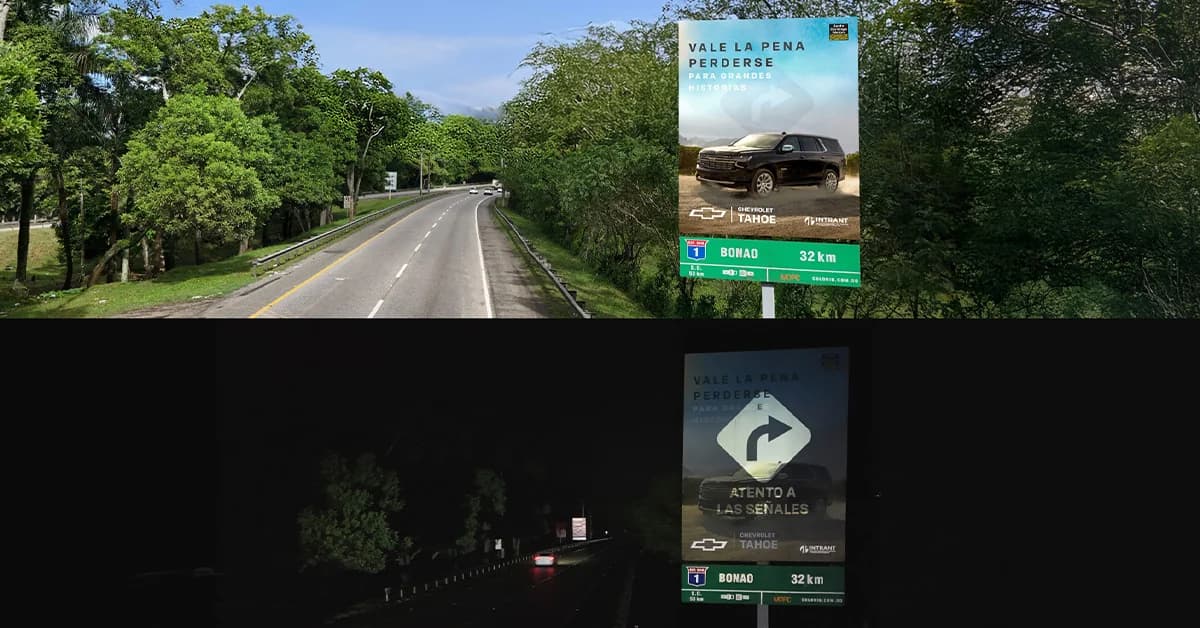
Content CreationOgilvy turned Chevrolet billboards in the Dominican Republic into reflective traffic signs that light up at night, improving visibility on poorly lit roads.
Case in 60 seconds
Many Dominican roads have poor lighting and deficient signage, reducing night-time visibility and raising accident risk.
Advertising billboards already sit beside the roads that lack signage, so they can be made to do double duty.
Turn Chevrolet billboards into reflective traffic signs that read as ads by day and light up as safety markers at night.
Ogilvy built the billboards with reflective material so they light up on contact with vehicle headlights, in partnership with Santo Domingo Motors and Dominican transit and public-works authorities.
No performance metrics are published on the agency page; the number of billboards, safety outcomes, and spend are not disclosed.
Strategy Breakdown
Creative & Execution System
Assets & channels
- Reflective out-of-home billboards that double as night-time traffic signs
Partners
- Ogilvy (Ogilvy Dominican Republic)
- Santo Domingo Motors
- National Institute of Transit and Land Transportation
- Ministry of Public Works (MOPC)
Participation mechanic
- Billboards activated by the headlights of passing vehicles
Creator role
- Not disclosed
Why Ogilvy's strategy worked
- 1
Repurposing roadside billboards that already exist turned brand space into public infrastructure at little added cost.
- 2
Solving a real safety gap gave a car brand a credible, useful role rather than a promotional one.
- 3
A day-vs-night reveal made the idea simple to grasp and demonstrate.
- 4
Partnering with transit and public-works authorities gave the initiative legitimacy.

Results
10M+
Views
5M+
Impressions
20K+
New followers

Results
51.7M+
Total views
2.9M+
Interactions
17.7%
Engagement rate