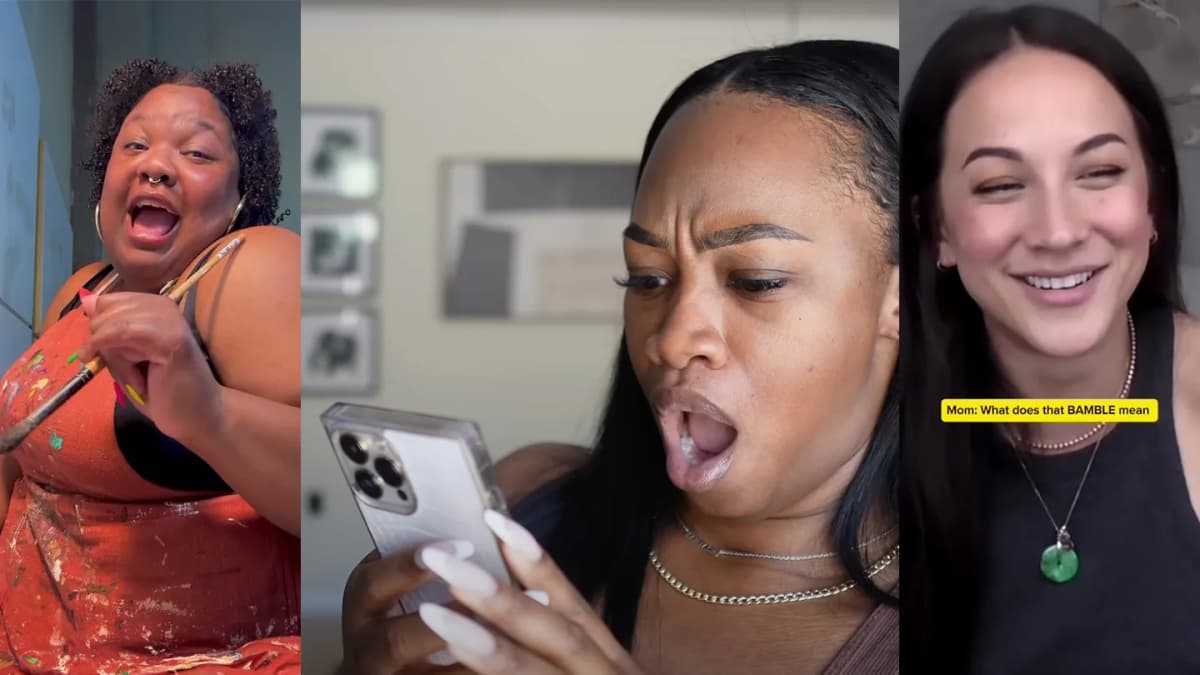

Bumble Valentine's Day Influencer Video Campaign
Influencer MarketingDigital Voices ran a Valentine's Day TikTok and YouTube influencer campaign for Bumble aimed at Gen Z and Millennial women, which the agency reports delivered 8.2M impressions.
Case in 60 seconds
Bumble wanted to be the most relevant and preferred dating app for women in a highly saturated and competitive market, so the brief was to assert Bumble within the cultural dating conversation among Gen Z and Millennial women.
The campaign turns on the struggles of singlehood around Valentine's Day rather than on romance, because relatable dating content gives Gen Z and Millennial women a reason to watch, talk and act on what the app offers.
Digital Voices set out to put Bumble at the centre of cultural conversation while driving app downloads, through "shock the system" partnerships with relevant, engaging and trusted influencers working across more than one platform.
Influencers across diverse communities and content verticals were given creative freedom on TikTok and YouTube to produce a video highlighting Bumble's app features and speaking to the struggles of singlehood on Valentine's Day.
Digital Voices reports 8,200,000 impressions, +400% over its guarantees, an 8.18% engagement rate and a $0.03 CPI, while the page reports no app download figure despite naming downloads as a goal.
Strategy Breakdown
Creative & Execution System
Assets & channels
- TikTok
- YouTube
Partners
- Digital Voices
Results & Evidence
| Metric | Value |
|---|---|
| Impressions | 8.2M impressions |
| Impressions vs Guarantee | +400% over guarantees |
| Engagement Rate | 8.18% engagement rate |
| CPI | $0.03 CPI |
Why Digital Voices' strategy worked
- 1
Giving creators creative freedom inside a fixed seasonal frame lets product features sit in content their audiences recognise, because the brand supplies the moment while each creator supplies the voice.
- 2
Casting across diverse communities and content verticals rather than within one niche carries a single message into several audiences, which suits a brand trying to hold a broad cultural conversation.
- 3
Reporting impressions against a guaranteed figure gives the client a fixed benchmark, so the +400% claim measures delivery against the agency's own promise rather than against a market norm.

Results
868K+
Total views
318%
Views vs baseline
28.6K
Creator video views

Results
27.6K
Likes
2.47M
Reach
970
Comments

Results
6.5x
Paid roas
60.8M
Impressions
+429%
Purchases yoy