
Blue Apron x NeoReach: Hungry For More
Influencer MarketingA conversion-first influencer campaign activated 92 creators across YouTube, Instagram, Twitter, and Twitch to acquire 2,200+ new Blue Apron subscribers on a $250,000 budget.
About the campaign
Blue Apron's paying customer base skewed middle-aged, and in the incentive-driven US meal kit market the brand needed measurable first-time sign-ups from younger demographics, not just reach. NeoReach's sharpest strategic move was a channel choice against category convention: while meal kit marketing concentrated on food-forward, lifestyle-aspirational content, younger audiences were spending their time on Twitch, a space competitive meal kit advertising had largely left untouched.
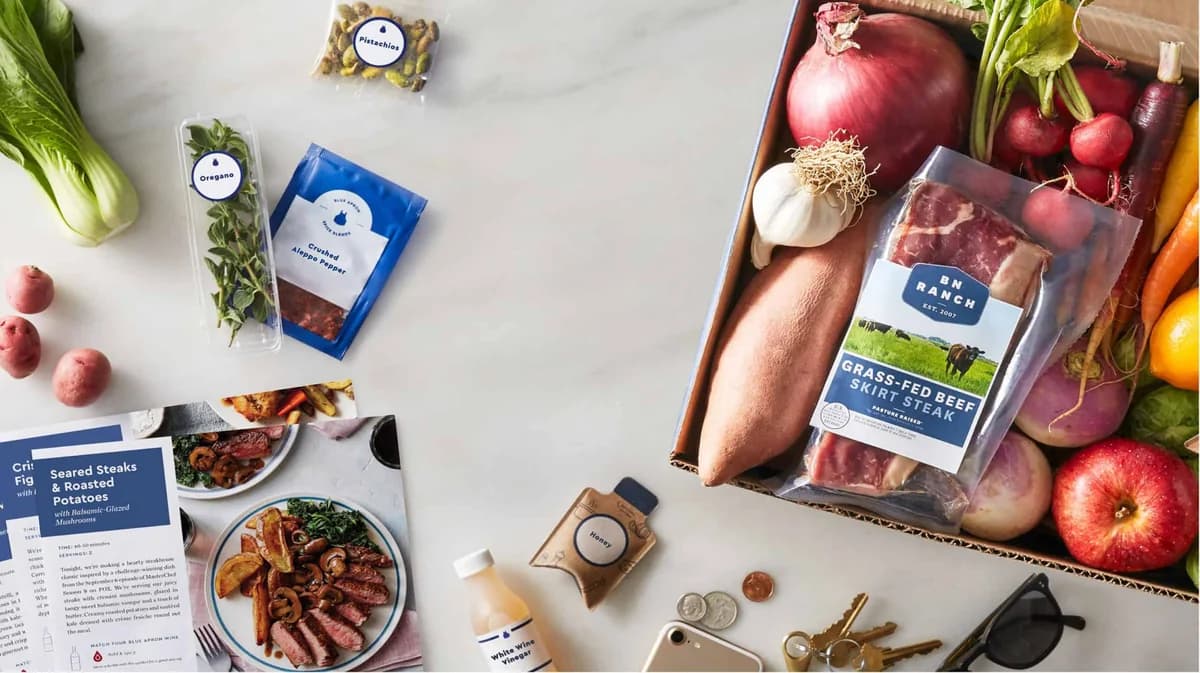
Using its Tensor Social platform to identify and vet talent, the agency activated 92 creators across food, lifestyle and gaming communities on YouTube, Instagram, Twitter and Twitch, shipping each a Blue Apron box and issuing a unique promo code good for two free meals. The brief was deliberately open, letting creators cook and present the product in their own voice and format, while the unique codes tied every conversion to the specific creator who drove it, matching measurement to the actual behaviour targeted: watch, click, subscribe. The programme produced more than 200 pieces of content on a $250,000 budget.
NeoReach reports 1.5 million people reached, 42,000 clicks, more than 2,200 new paying customers and a 1.9x ROI, with 98.6% favourable audience sentiment; all figures are the agency's own and unverified by Blue Apron.
Case in 60 seconds
Blue Apron needed to grow its subscriber base beyond an older existing demographic without repositioning its core home-cooking proposition, in a competitive U.S. meal kit market.
Younger audiences who were unlikely to discover Blue Apron through conventional food media were already spending significant time on platforms like Twitch, and a unique promo code could create a direct, trackable conversion path from any creator's content.
Issue 92 influencers — drawn from food, lifestyle, and gaming communities — with unique two-free-meals promo codes and ship them a Blue Apron box, letting each creator produce content in their own voice and format, per the NeoReach case study.
NeoReach used its Tensor Social platform to identify and vet creators, then seeded them with meal kits across YouTube, Instagram, Twitter, and Twitch, producing 200+ pieces of content within a $250,000 budget.
The campaign reportedly reached 1.5 million people, drove 42,000 clicks, converted 2,200+ into new paying customers, and returned a 1.9x ROI. All figures are self-reported by NeoReach and have not been independently verified.
Strategy Breakdown
Creative & Execution System
Assets & channels
- YouTube videos (cooking/vlog format)
- Instagram posts
- Twitch live streams
- Twitter posts
- Branded unique promo codes (two free meals per code)
- Shipped Blue Apron meal kit boxes (product seeding)
Partners
- NeoReach (influencer platform and managed services, self-reported lead agency per https://neoreach.com/case-studies/blue-apron/)
- NeoReach Tensor Social (proprietary creator identification and vetting technology, per https://neoreach.com/case-studies/blue-apron/)
Participation mechanic
- Influencers received a Blue Apron meal kit box and a unique promo code
- Creators produced content in their own format and voice (open brief)
- Audiences used promo codes to claim two free meals and register as new subscribers
- Click-through and conversion tracked per creator via unique codes
Creator role
- Authentic product demonstrators — creators cooked and reviewed meal kits in their own style
- Performance drivers — each creator's unique code made them individually accountable for conversion events
- Audience bridge — Twitch gaming creators extended reach into demographics outside food/lifestyle media
Results & Evidence
| Metric | Value |
|---|---|
| New Paying Customers Acquired | 2,200+ |
| Reported ROI | 1.9x |
| Total Impressions | 7,400,000+ |
| Audience Reached | 1.5 million+ |
| Clicks Generated | 42,000 |
| Favorable Audience Sentiment | 98.6% |
Why NeoReach's strategy worked
- 1
Hard attribution mechanics (unique promo codes per creator) aligned measurement with actual conversion behaviour rather than estimated reach, giving the campaign a defensible commercial outcome signal. Per NeoReach, every subscriber acquisition was traceable to the creator who drove it.
- 2
Platform diversification beyond the natural category home (food and lifestyle content) can surface incremental audiences at relatively low marginal cost when creator selection is data-driven. The inclusion of Twitch gaming streamers placed Blue Apron in front of audiences that competing meal kit campaigns were unlikely to be targeting, as NeoReach reports.
- 3
Product seeding gave creators genuine material to work with — a cooked meal — rather than a brand talking point alone. The open creative brief let each creator present the product in their own voice, which NeoReach associates with the 98.6% favorable sentiment figure, though the methodology behind that metric is not disclosed.
- 4
An open brief across 92 creators produced 200+ pieces of content at a variety of formats and audience sizes, distributing risk across the portfolio. One piece went viral, per NeoReach, though the creator and platform are not named, limiting replication insight.
- 5
Conversion-focused campaign briefs benefit from being explicit about the success metric from day one. By building promo codes and trackable clicks into the brief rather than adding them later, the campaign avoided the disconnect between creative KPIs and commercial KPIs that commonly afflicts influencer programs.
Results
+700
Claims per day
11%
Sales increase
800%
Claims increase vs traditional insurers
Results
74%
Tiktok reach
11 pts
Sales value increase
75%
Willingness to pay more
Results
3M+
Views
43K+
Engagement
34K
Brand social followers