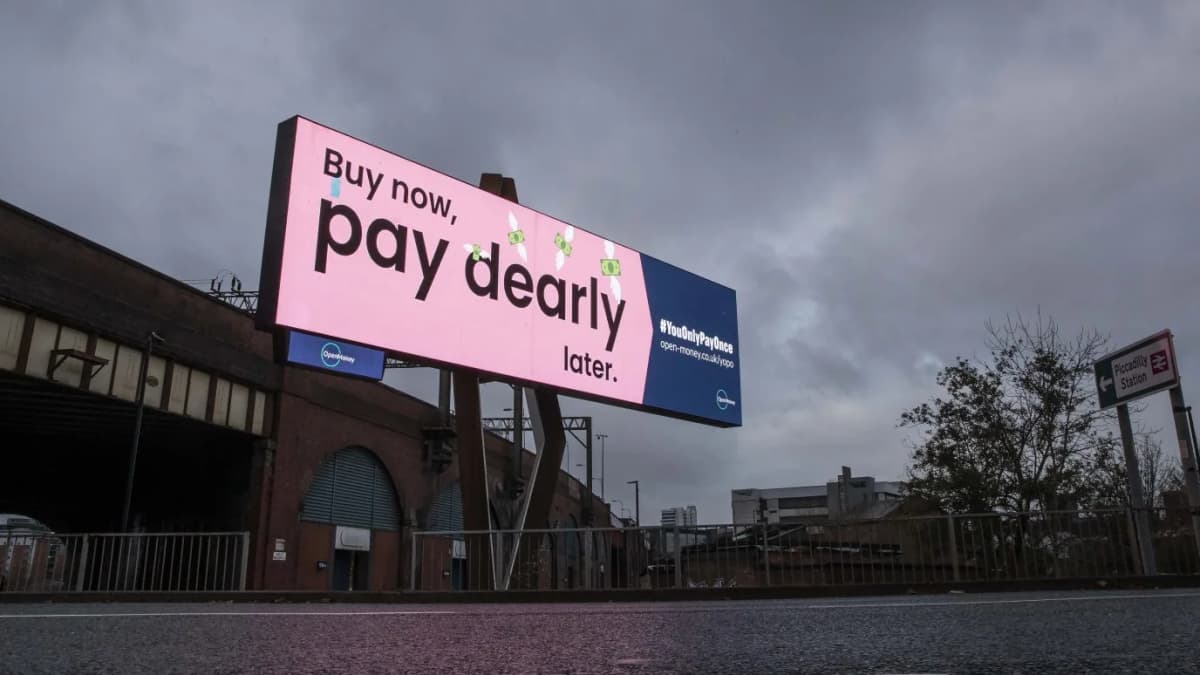

OpenMoney #YOPO You Only Pay Once Campaign
Influencer MarketingSmoking Gun ran the You Only Pay Once campaign for OpenMoney against unregulated Buy Now Pay Later products, securing 14 pieces of media coverage across national and regional titles.
Case in 60 seconds
Buy Now Pay Later financing products were seeing a huge rise in popularity while remaining completely unregulated, so OpenMoney needed to raise awareness of their dangers and join the campaign for them to be regulated.
The campaign turns on the emotional cost of debt rather than its arithmetic, because Smoking Gun built the message around the freedom and calm of only paying once for items people can actually afford.
You Only Pay Once was set up as a direct answer to Buy Now Pay Later, presenting a single affordable payment as freedom and 'zen' rather than a route into a cycle of debt.
Smoking Gun designed three billboards, outreached research on consumer attitudes to Buy Now Pay Later alongside real debt case studies, and organised a broadcast day with OpenMoney financial advisor Anthony Morrow and Alice Tapper. Alice Tapper launched the campaign content with OpenMoney, while Ed Lemont, Tabitha Warley and a number of micro influencers spread the message through 32 Instagram influencer stories.
Smoking Gun reports that OpenMoney claimed 14 pieces of media coverage, including 13 national hits in titles such as The Sun and The Times, with 100% of reports carrying key messaging. The page also lists 32 Instagram influencer stories reaching 42,125 and the February 2021 announcement that the FCA would regulate these products.
Strategy Breakdown
Creative & Execution System
Assets & channels
Partners
- Smoking Gun
Creator role
- Alice Tapper
- Ed Lemont
- Tabitha Warley
Results & Evidence
| Metric | Value |
|---|---|
| Media Coverage | 14 pieces |
| National Coverage Hits | 13 national hits |
| Key Messaging Share | 100% |
| Instagram Stories | 32 stories |
Why Smoking Gun's strategy worked
- 1
Pairing a consumer finance brand with a financial literacy campaigner lets the brand join a regulation argument as a champion rather than a seller, because the campaigner already carries credibility on the cause.
- 2
Real people caught in a debt trap combined with consumer research give finance desks both a human story and data, which is how a fintech warning earns space in national titles.
- 3
Framing the alternative behaviour as freedom rather than restriction lets a warning campaign carry a positive message, so the brand argues against a product without lecturing the people who use it.



Results
920K
Total impressions
172M
Earned media impressions
86K
Influencer post engagements