
Hellmann's Mayonnaise Instrument Mayo Music
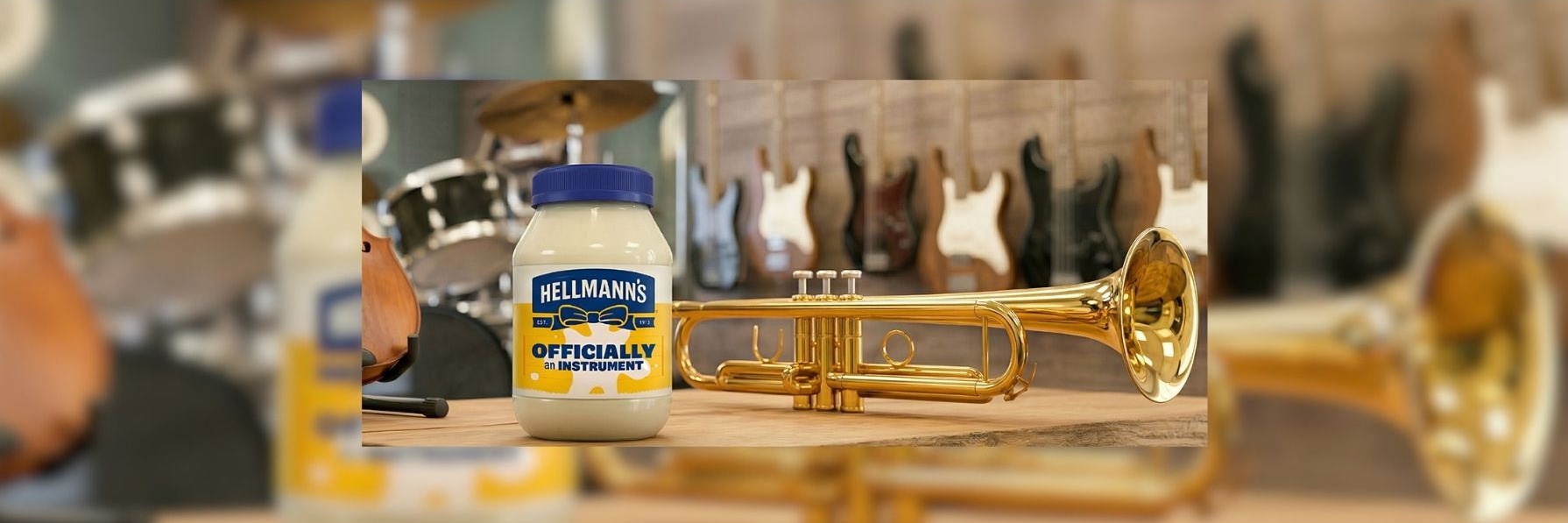
Influencer MarketingWPP Media enlisted musical creators and a Northumbria University researcher to prove mayonnaise is an instrument for Hellmann's, and reports the campaign hit 1.12B views in a single day.
Case in 60 seconds
Hellmann's needed to build consideration among GenZ and younger millennials entering their mayonnaise-buying years, while a brand strategy of not forcing its way in limited it to places where it was relevant to them.
A SpongeBob SquarePants episode had asked whether mayonnaise is an instrument, and the fandom had argued about it for decades, so Hellmann's had an open question to answer rather than a moment to borrow. WPP Media frames the fandom as a key cultural pitstop for the audience.
The organizing thesis was to answer the fandom's question literally, proving the musical properties of mayo beyond doubt so that Hellmann's settled a long-running debate rather than inserting itself into one.
WPP Media enlisted musical creators to make mayo music and approached Northumbria University, where Dr Rachel Durkin published a research paper confirming that mayonnaise is an instrument. The agency then released a celebratory mayonnaise track, which DJ A Skillz remixed and performed during a club set, and closed with The Mayonnaise Lectures teaching people to play mayo.
WPP Media reports 1.12 billion views in a single day and $10.4 million of earned media coverage from 41 media placements against a $100,000 paid media investment. The agency also reports 9.3k organic mentions, more than 120,000 engagements and a 1,000% year on year increase in TikTok mentions.
Strategy Breakdown
Creative & Execution System
Assets & channels
- TikTok
Partners
- WPP Media
Creator role
- DJ A Skillz
Results & Evidence
| Metric | Value |
|---|---|
| Views in a Single Day | 1.12B views |
| Earned Media Coverage | 41 |
| Media Placements | 41 media placements |
| Paid Media Investment | 41 |
| Organic Mentions | 9.3K organic mentions |
| Engagements | more than 120K engagements |
Why WPP Media's strategy worked
- 1
A question an audience has argued over for years gives a brand a reason to appear, because answering it settles a conversation that already exists rather than opening one the audience never asked for.
- 2
A published research paper turns a fandom joke into a reportable claim, which gives news outlets something to cover rather than leaving the story inside the fan community that started it.
- 3
Staging the work in steps, from creator music to a research paper, a remix and a lecture series, gives each step fresh material for coverage rather than relying on a single launch moment.
Results
3M+
Views
43K+
Engagement
34K
Brand social followers
Results
1.7M
Engagements
41.1M
Impressions
145%
Assets delivered