
Crayola Color Your World
Influencer MarketingDentsu Creative reframed the Colors of the World skin-tone crayon launch around inherent inclusion, generating 2.4 billion impressions and selling out stock.
About the campaign
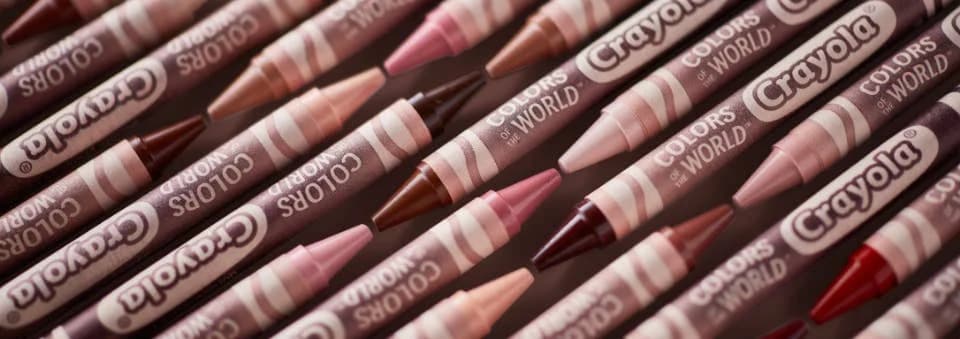
Crayola faced a delicate launch problem with Colors of the World, a 24-crayon set formulated to represent more than 40 global skin tones: by 2023 audiences had grown skeptical of corporate diversity language, and the brand had first produced a skin-tone pack back in 1992, so the product risked reading as a dated idea relaunched for marketing convenience.
Dentsu Creative's strategic move was a single word swap, from diversity to inclusion, reframing the product as something inherent to every child rather than something a brand grants. Color Your World positioned the pack so that every child has the power to color themselves into the world, visible on paper and in life, and built the campaign around one concrete device: a child holding a crayon to their skin and finding a match, a moment of recognition that needs no explanation. The crayon set itself was formulated with Victor Casale of MOB and Pure Culture Beauty, and a 2023 case film carried the story through agency channels, with PR and communications leading the push.
Dentsu Creative reports the campaign generated 2.4 billion media impressions and sold 54,800 crayons and 13,000 coloring books during the campaign window, with demand outpacing supply and 2,000 back-in-stock email requests logged on Crayola.com.
Case in 60 seconds
Crayola needed to launch Colors of the World, a 24-crayon set formulated to represent over 40 global skin tones, without being read as a diversity marketing exercise — a risk heightened by audiences' growing skepticism toward corporate diversity language.
The word "diversity" had become corporatized, leading consumers to read it as lip service. Shifting to "inclusion" reframed the product as something inherent rather than something to be granted.
Position the Colors of the World pack so that every child has the power to color themselves into the world — visible on paper and in life — rather than framing the launch as a brand doing something good for diversity.
The campaign was built around a central device: a child holding a crayon to their skin and finding a match, making the feeling of being seen concrete and tangible. A 2023 case study film was distributed via Dentsu Creative's own channels. The specific paid-media channel plan is not detailed in the source material.
The campaign generated 2.4 billion media impressions and sold 54,800 crayons and 13,000 coloring books during the campaign window, with demand outpacing supply and 2,000 back-in-stock email requests recorded on Crayola.com.
Strategy Breakdown
Creative & Execution System
Assets & channels
- Case study film (2023), distributed via Dentsu Creative and AgencyCompile channels
- YouTube (listed as a channel in campaign metadata)
- PR and communications (primary service listed in campaign data)
- Crayola.com (back-in-stock notification function cited in results)
Partners
- Dentsu Creative (lead agency, strategy and creative)
- Victor Casale / MOB & Pure Culture Beauty (product formulation — credited in source material for designing the 24-crayon set)
Participation mechanic
- Back-in-stock email notification on Crayola.com, generating 2,000 sign-ups from consumers waiting for crayon availability
Creator role
- No creator or influencer mix is described in the source material; the campaign appears to have been brand and agency led
Results & Evidence
| Metric | Value |
|---|---|
| Media Impressions | 2.4 billion |
| Crayons Sold | 54,800 |
| Coloring Books Sold | 13,000 |
| Back-in-Stock Email Notification Requests | 2,000 |
Why Dentsu Creative's strategy worked
- 1
Replacing a corporatized category term ('diversity') with one that emphasises inherent belonging ('inclusion') gave the campaign a tone that cut through audiences' existing skepticism, as Dentsu Creative's strategy notes explicitly acknowledge.
- 2
Anchoring an abstract brand value in a single, concrete product truth — a child holding a crayon to their skin and finding a match — made the emotional proposition legible to both children and parents without requiring explanation.
- 3
A legacy product can support a fresh launch if the messaging is rooted in a tangible consumer experience rather than a corporate heritage claim. Colors of the World was first introduced in concept in 1992; the 2023 launch earned new cultural attention by reframing what the product does for the person using it.
- 4
Demand outpacing supply — evidenced by 2,000 back-in-stock notification requests on Crayola.com — suggests the campaign generated genuine purchase intent rather than impressions alone, though the two cannot be cleanly separated from the available data.
- 5
A wide impression count (2.4 billion) paired with relatively modest unit sales (54,800 crayons) points to strong earned or owned reach. Whether that gap reflects the campaign window, distribution constraints, or price-point friction is not explained in the source material.
Results
10M+
Views
5M+
Impressions
20K+
New followers
Results
51.7M+
Total views
2.9M+
Interactions
17.7%
Engagement rate